Product Description
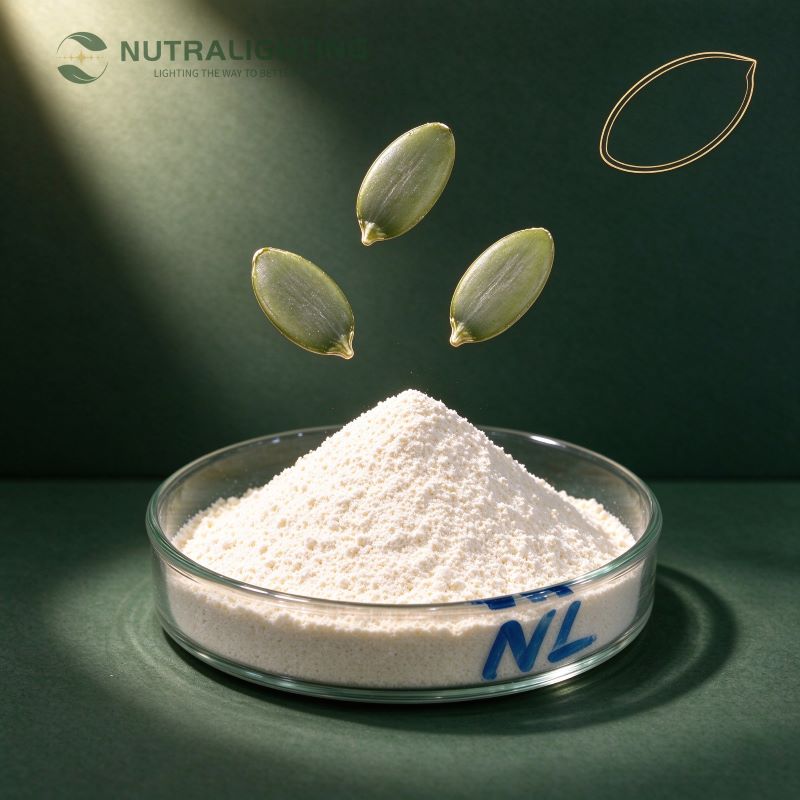
Pumpkin Seed Extract is available in three beta-sitosterol grades – 2%, 5%, and 10% – delivering precise phytosterol standardisation for urinary and prostate support formulations.
Basic Information
| Item | Content |
| Botanical Name | Cucurbita pepo L. (Cucurbitaceae) |
| Part Used | Dried seed |
| Standardised To | Beta-Sitosterol 2% / 5% / 10% (HPLC) |
| Appearance | Light beige to pale yellow powder |
| Odour | Characteristic, slightly nutty |
| Solubility | Insoluble in water; soluble in hot ethanol and oils |
| Origin | Hunan, Hebei and Jilin Provinces, China |
| Particle Size | 80-100 mesh (available on request) |
| Shelf Life | 24 months when stored properly |
| Storage | Cool, dry place away from light and moisture |
Product Description
What We Offer and Why It Matters
We supply Pumpkin Seed Extract in three beta-sitosterol grades: 2%, 5%, and 10%. Each grade is independently produced and HPLC-verified. This gives formulators clear options for their urinary and prostate support product positioning.
The 2% grade is suitable for general wellness products where pumpkin seed is combined with other botanicals supporting urinary and metabolic health. The 5% grade is our standard offering. It matches the sitosterol content used in most published clinical studies. The 10% grade is our concentrated option for high-potency urinary support formulations.
Our competitive edge comes from three sources. First, our raw material is sourced from Hunan, Hebei and Jilin provinces, the major pumpkin seed-producing regions in China. These areas provide the climate conditions that produce seeds with naturally high phytosterol concentrations. Second, we use an ethanol extraction process that preserves the full phytosterol spectrum including beta-sitosterol, campesterol, and stigmasterol. Third, every batch is tested for beta-sitosterol content and total phytosterol profile before release.
Key Features
Pumpkin seed (Cucurbita pepo) is one of the most widely used botanicals for urinary and prostate support. The seed contains phytosterols, fatty acids, proteins, and cucurbitacins. The phytosterol fraction is the primary bioactive component responsible for most of the plant’s urological effects.
Beta-sitosterol is the most abundant and best-studied phytosterol in pumpkin seed. It is a plant sterol with documented effects on benign prostatic hyperplasia (BPH) symptoms and urinary function. Beta-sitosterol serves as the key quality marker for pumpkin seed extract standardisation.
Cucurbitacin compounds are unique triterpenoids found in pumpkin seed. They contribute to the antiparasitic and anti-inflammatory effects traditionally attributed to pumpkin seed. The amino acid cucurbitine (cucurbitinic acid) is a characteristic constituent of the seed.
Active Constituents
Primary Marker: Beta-Sitosterol
Beta-sitosterol is the primary quality marker for pumpkin seed extract. It is measured by HPLC with UV detection at 210 nm and expressed as a percentage of the extract weight.
Three grades are available:
- 2% beta-sitosterol – entry-level standardisation for general urinary wellness formulas
- 5% beta-sitosterol – industry standard matching most published clinical studies
- 10% beta-sitosterol – high-potency concentrated standardisation for targeted prostate support
Batch-to-batch variation is kept within ±10% of the labelled beta-sitosterol value for all grades.
Phytosterol Profile
The phytosterol fraction of pumpkin seed extract includes several bioactive compounds:
- Beta-sitosterol – 60-80% of total phytosterols, primary active constituent
- Campesterol – 10-20% of total phytosterols
- Stigmasterol – 5-15% of total phytosterols
- Sitostanol – trace amounts (< 5%)
- Brassicasterol – trace amounts (< 3%)
The exact phytosterol profile varies by seed variety and extraction method. Our GC and HPLC chromatograms are included in the COA for each batch.
Fatty Acid Fraction
Pumpkin seed oil is rich in unsaturated fatty acids. The fatty acid fraction contributes to the overall nutritional value and may have independent biological activity.
- Linoleic acid (omega-6): 45-55% of total fatty acids
- Oleic acid (omega-9): 30-40% of total fatty acids
- Palmitic acid: 8-12% of total fatty acids
- Alpha-linolenic acid (omega-3): 2-5% of total fatty acids
Our ethanol extraction process preserves the natural fatty acid profile. The fatty acid content is reported in the COA but is not used as a primary standardisation marker.
Analytical Data Sheet
| Item | Specification | Method | Result |
| Beta-Sitosterol (2% Grade) | ≥ 2.0% | HPLC 210nm | 2.0-2.4% |
| Beta-Sitosterol (5% Grade) | ≥ 5.0% | HPLC 210nm | 5.0-6.0% |
| Beta-Sitosterol (10% Grade) | ≥ 10.0% | HPLC 210nm | 10.0-12.0% |
| Total Phytosterols | ≥ 8.0% | GC-FID | 8.0-15.0% |
| Campesterol | ≥ 1.0% | HPLC | 1.0-3.0% |
| Stigmasterol | ≥ 0.5% | HPLC | 0.5-2.0% |
| Linoleic Acid | ≥ 40.0% | GC-FID | 45.0-55.0% |
| Oleic Acid | ≥ 30.0% | GC-FID | 30.0-40.0% |
| Loss on Drying | ≤ 6.0% | KF | ≤ 6.0% |
| Heavy Metals (Pb) | ≤ 2.0 mg/kg | ICP-MS | < 1.0 mg/kg |
| Heavy Metals (As) | ≤ 1.0 mg/kg | ICP-MS | < 0.5 mg/kg |
| Heavy Metals (Cd) | ≤ 0.3 mg/kg | ICP-MS | < 0.2 mg/kg |
| Heavy Metals (Hg) | ≤ 0.1 mg/kg | ICP-MS | < 0.05 mg/kg |
| Pesticide Residues | Pass | GC-MS/LC-MS | Not Detected |
| Residual Solvents | Pass | GC | Compliant |
| Total Plate Count | ≤ 1000 CFU/g | USP <61> | < 10 CFU/g |
| Yeast & Mold | ≤ 100 CFU/g | USP <61> | < 10 CFU/g |
| E. coli | Negative | USP <61> | Negative |
| Salmonella | Negative | USP <61> | Negative |
Mechanism of Action
Prostate Health Support
Beta-sitosterol inhibits 5-alpha-reductase, the enzyme that converts testosterone to dihydrotestosterone (DHT). DHT is the primary androgen responsible for prostate growth in benign prostatic hyperplasia (BPH). By reducing DHT levels in prostate tissue, beta-sitosterol helps slow prostate enlargement.
Beta-sitosterol also modulates inflammatory pathways in the prostate. It inhibits NF-κB activation and reduces the expression of pro-inflammatory cytokines including TNF-α and IL-6. This anti-inflammatory effect complements the hormonal mechanism.
Urinary Function Improvement
Pumpkin seed extract improves urinary flow parameters in men with BPH. Clinical studies show improvements in maximum urinary flow rate (Qmax), post-void residual volume, and International Prostate Symptom Score (IPSS). The mechanism involves both hormonal modulation and direct smooth muscle relaxation in the urinary tract.
The fatty acid fraction of pumpkin seed extract may also contribute to urinary function. Linoleic acid and oleic acid support cell membrane integrity in the urinary epithelium and may reduce urinary tract irritation.
Antioxidant Protection
Phytosterols act as antioxidants by competing with cholesterol for incorporation into cell membranes. This stabilises membrane structure and reduces oxidative stress in prostate and urinary tract tissues.
Beta-sitosterol also scavenges free radicals directly. The sterol structure quenches singlet oxygen and neutralises lipid peroxyl radicals, protecting cell membranes from oxidative damage.
Antiparasitic Activity
Cucurbitacin compounds and the amino acid cucurbitine have well-documented antiparasitic activity. They paralyse tapeworms and roundworms by blocking neuromuscular transmission. This is the traditional mechanism behind pumpkin seed’s long history of use as a deworming agent.
While modern formulations focus on urinary and prostate support, the antiparasitic properties remain relevant for products targeting parasitic infections.
Traditional and Modern Use
Traditional Use
Cucurbita pepo seeds have been used in Native American, European, and Asian traditional medicine for centuries. Indigenous peoples of North America used pumpkin seed for urinary complaints and as a deworming agent. European traditional medicine employed pumpkin seed for prostate enlargement and urinary tract disorders.
In traditional Chinese medicine, pumpkin seed (Nanguazi) is classified as sweet and neutral in nature. It enters the stomach and large intestine meridians. Its traditional functions include parasitic expulsion, qi tonification, and fluid generation.
The seed is also a valued culinary ingredient worldwide. Pumpkin seeds are consumed as a snack, added to salads and bread, and pressed for pumpkin seed oil, which is prized in Central and Eastern European cuisine.
Modern Clinical Evidence
A 2005 double-blind, placebo-controlled RCT published in Urology (Bach et al.) demonstrated that 500 mg per day of liquid pumpkin seed extract significantly improved IPSS scores and Qmax in men with mild to moderate BPH. This study is one of the most cited clinical trials supporting pumpkin seed extract for urinary function.
A 2014 systematic review in the Journal of Ethnopharmacology evaluated the efficacy of Cucurbita pepo for BPH. The review concluded that pumpkin seed extract showed significant improvement in urinary symptoms compared to placebo, with a favourable safety profile.
Clinical studies typically use doses of 500-1,000 mg per day of standardised pumpkin seed extract. The effective beta-sitosterol dose is estimated at 60-140 mg per day based on published trials.
Regulatory Status
United States (FDA)
Pumpkin seed (Cucurbita pepo) is generally recognized as safe (GRAS) for use in food products. The seed has a long history of dietary use in North America and Europe.
Under DSHEA, Cucurbita pepo seed and its extracts may be used as an ingredient in dietary supplements. The seed has been marketed as a dietary supplement ingredient in the United States for many years. Structure/function claims related to urinary support, prostate health, and antioxidant protection may be made provided the mandatory disclaimer is included. This product is not intended to diagnose, treat, cure, or prevent any disease.
Formulators should ensure claims comply with 21 CFR 101.93 requirements. Beta-sitosterol is the primary bioactive constituent and should be accurately labelled on the supplement facts panel.
European Union (EMA)
Cucurbita pepo L., semen is covered by a Community herbal monograph published by the EMA. The monograph specifies parameters for the dried seed and its preparations.
The EMA assessment confirms traditional use for:
- Temporary relief of minor lower urinary tract symptoms
- Support of normal prostate function in men over 45
- Topical use for skin irritation and minor wounds
The EMA monograph specifies the following preparation parameters:
- Soft extract (DER 15-25:1), extraction solvent: ethanol 92% m/m
- Dry extract (DER 15-30:1), extraction solvent: ethanol 60% v/v
- Fatty oil: obtained by cold pressing
ESCP (European Scientific Cooperative on Phytotherapy) recommends 500-1,000 mg per day of pumpkin seed extract for urinary support.
China (NMPA)
Pumpkin seed (Nanguazi) is listed in the Chinese Pharmacopoeia 2020 Edition, Part 1. The pharmacopoeial monograph covers the dried seed of Cucurbita moschata and specifies identification, purity, and potency testing parameters.
The recommended dosage in the Chinese Pharmacopoeia is 9-15 g per day for decoction. The seed is classified as sweet and neutral in nature, entering the stomach and large intestine meridians.
China is a major producer of pumpkin seed. Major cultivation areas include Hunan, Hebei, Jilin, Shandong, and Inner Mongolia provinces. Domestic sourcing is available for clients who prefer Chinese-grown raw material.
Recommended Usage
Dosage Range
Based on clinical studies, the recommended daily intake of pumpkin seed extract ranges from 500-1,000 mg. For our extracts, this translates to:
- 2% beta-sitosterol grade: 1,500-5,000 mg per day
- 5% beta-sitosterol grade: 600-2,000 mg per day
- 10% beta-sitosterol grade: 300-1,000 mg per day
For prostate and urinary support, clinical studies typically use 500-1,000 mg per day of 5% grade extract. For general wellness, lower doses in the 2% grade range may be sufficient.
The exact dose should be determined based on product formulation, target indication, and desired beta-sitosterol intake.
Application Forms
Pumpkin Seed Extract is suitable for multiple dosage forms:
- Capsules and tablets for prostate and urinary support supplements
- Softgels – the lipophilic phytosterols disperse well in oil bases
- Powdered blends for multi-ingredient men’s health formulas
- Functional foods and beverages – the nutty flavour is well-tolerated
Formulation Notes
Pumpkin seed extract has a characteristic nutty flavour that is generally well-accepted in consumer products. The mild taste requires minimal masking in most formulations.
The extract is lipophilic. For aqueous formulations, emulsification or solubilisation technology is recommended. The 2% and 5% grades disperse more easily in mixed matrix systems due to their lower phytosterol concentration.
Blend uniformity should be verified through sampling and HPLC beta-sitosterol analysis before compression or encapsulation. The extract is sensitive to heat and light. Processing temperatures should be kept below 50°C where possible.
Disclaimer
This product is intended for use as an ingredient in dietary supplements and food products. It is not intended to diagnose, treat, cure, or prevent any disease. Statements regarding this product have not been evaluated by the Food and Drug Administration. Consult your healthcare provider before use, especially if you are pregnant, nursing, taking medication, or have a medical condition. This product is intended for male urinary and prostate support. Individuals taking medications should consult their physician before use. This information is provided for educational purposes and does not constitute medical advice.
Why Choose Nutraligting
Your Core Needs
- Stable and traceable beta-sitosterol content, with figures fully matching the product label claims, and no unsubstantiated estimated values are accepted.
- Clear and layered flexible specification options, which adapt to the product positioning demands of different budget ranges and brands.
- Complete and traceable information of the full phytosterol profile, instead of vague data that only marks a single active component.
- Obtain a full set of compliance documents quickly, so that your production, third-party testing and listing progress will never be delayed by missing materials.
- Direct and practical technical support that accurately solves your actual formulation problems, without facing pre-set generic template replies.
Our Solutions
- Strict full-process standardized control is implemented for all production batches. The actual beta-sitosterol content of each batch is confirmed through HPLC testing, and theoretical calculated values will never be used to replace actual test results.
- Three practical and precise gradient specifications of 2%, 5% and 10% are available for your free selection, which can meet the demands of both cost-effective mass-market product lines and high-potency clinical-strength formulations.
- After you submit a formal application, you can obtain the product documents of pumpkin seed extract within 24 hours, including COA test report, detailed technical dossier and targeted regional compliance support documents.
- You can directly get in touch with the exclusive in-house technical team of Nutralighting. All professional questions can get targeted and practical answers, and there are absolutely no copy-pasted generic replies that waste your time.
References
EMA. Community herbal monograph on Cucurbita pepo L., semen. European Medicines Agency.
European Pharmacopoeia. Monograph on Cucurbitae semen. 11th Edition.
Chinese Pharmacopoeia Commission. Pharmacopoeia of the People’s Republic of China, 2020 Edition, Part 1. Nanguazi (Cucurbitae semen) monograph.
Bach PH, et al. A liquid extract of pumpkin seed is effective in the treatment of male lower urinary tract symptoms. Urology. 2005;65(5):907-911.
PMC10142909. The Lack of Standardization and Pharmacological Effect Limits the Potential Clinical Usefulness of Phytosterols in Benign Prostatic Hyperplasia. NIH.
PMC11096994. Assessing β-Sitosterol Levels in Dietary Supplements for Benign Prostatic Hyperplasia. NIH.
IJPHP. A Comprehensive Review on Cucurbita Pepo L.: Pharmacognostical Characterization, Phytochemistry, and Pharmacological Activities. 2026.
Frequently Asked Questions
24 months from the date of manufacture when stored in a cool, dry place away from direct sunlight.
Yes. Our low-bitterness process is available to meet sensitive palatability requirements for capsules and beverages.
Yes. We support OEM/ODM services including custom dosing, encapsulation, and branded packaging. Please contact our sales team for details.
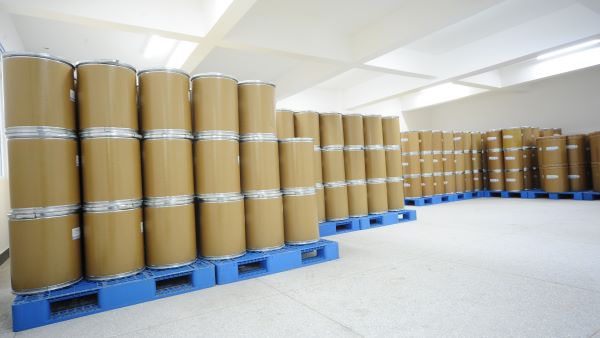
The standard MOQ is 1 kg. Bulk orders (25 kg drums and above) are also accepted with competitive pricing.
Absolutely. A Certificate of Analysis (COA) is provided with every shipment, and independent third-party testing (HPLC, heavy metals, microbiology) can be arranged upon request.
Packaging & Shipping
Standard Packaging
- Standard packaging: 1 kg / aluminum foil bag with two inner plastic liners
- 25 kg / fiber drum with double PE liner
- Custom packaging available on request
Shipping Terms
- Ships worldwide via express (DHL, FedEx, UPS) or air freight.
- Sample orders dispatched within 3–5 business days.
- Bulk orders dispatched within 10–15 business days after payment confirmation.
Shelf Life & Storage
- Store in a cool, dry place below 25°C.
- Keep away from direct sunlight, moisture, and strong odors.
- Seal tightly after each use to maintain potency and freshness.