Product Description
Three Vitamin C grades – 5%, 10%, and 20% – each with independently verified total polyphenol and total flavonoid content, sourced from Poland, Romania, and Shaanxi Province.
Basic Information
| Item | Content |
| Botanical Name | Rosa canina L. (Rosaceae) |
| Part Used | Dried ripe fruit (hips) |
| Standardised To | Grade A (Vitamin C): ascorbic acid ≥ 5.0% Grade B (Vitamin C): ascorbic acid ≥ 10.0% Grade C (Vitamin C): ascorbic acid ≥ 20.0% |
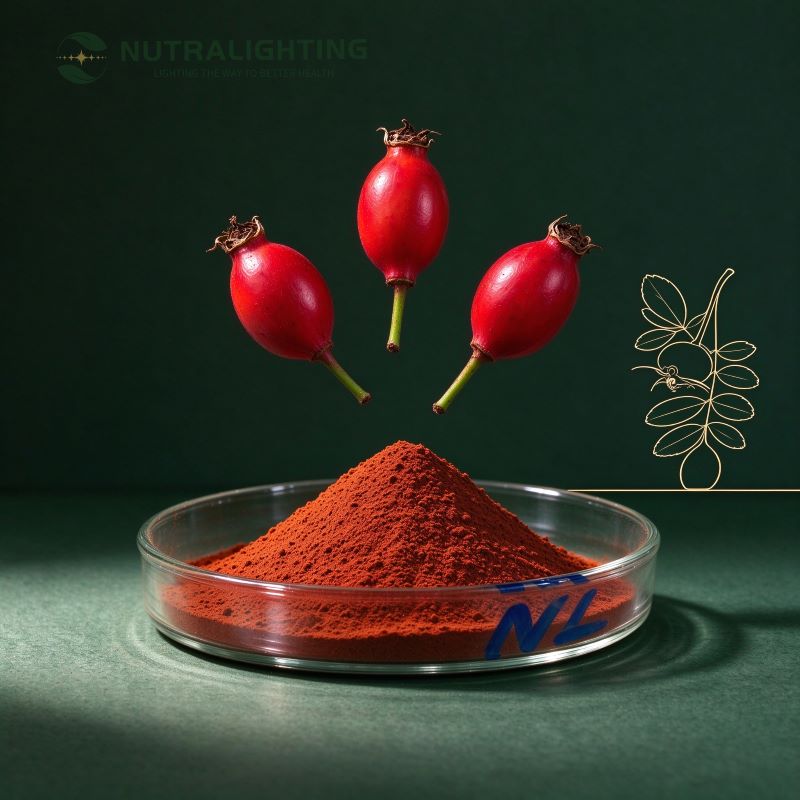
| Appearance | Light brown to reddish-brown fine powder |
| Odour | Mild fruity, slightly tart |
| Solubility | Suspendable in water; soluble in aqueous ethanol |
| Origin | China |
| Particle Size | 80-100 mesh (available on request) |
| Shelf Life | 24 months when stored properly |
| Storage | Cool, dry place away from light and moisture |
| Target Market | Europe, North America (beauty and antioxidant) |
| Core Application Areas | Skin Health; Antioxidant; Joint Support |
Product Description
Three Vitamin C Grades for Three Different Market Segments
We produce Rosehip Extract in three vitamin C grades: 5%, 10%, and 20%. Each grade is independently verified by HPLC for ascorbic acid content, and every batch carries a full analytical profile including total polyphenols and total flavonoids.
The 5% grade delivers a moderate vitamin C dose suited for general wellness and antioxidant-focused supplements. It works well when rosehip is one component among several botanicals in a multi-ingredient formula. The inclusion rate is gentle enough to preserve capsule fill weight while still providing meaningful antioxidant capacity.
The 10% grade targets products built around immune support and skin health. This specification aligns with the vitamin C concentration most commonly found in published studies on rosehip supplementation. Formulators constructing evidence-positioned formulas typically select this level.
The 20% grade is our most concentrated offering. It is designed for premium beauty-from-within and vitality products where maximum vitamin C intake per serving is a priority. At this potency, even modest inclusion rates deliver substantial amounts of natural vitamin C, flavonoids, and carotenoids.
Several features set our supply apart:
- Rosa canina specificity – we use Rosa canina L. exclusively, the species with the strongest clinical evidence base for joint comfort and skin vitality
- Complete marker transparency – each batch report includes vitamin C, total polyphenols, and total flavonoids as separate values, not a single composite number
- Whole-fruit extraction – our process uses the entire dried fruit, preserving the full natural ratio of vitamin C, flavonoids, and carotenoids
- Multi-origin sourcing – Poland and Romania provide traditional European quality; Shaanxi offers a reliable domestic Chinese alternative
Why Rosehip Stands Out Among Botanical Ingredients
Rosehip is one of the few botanical ingredients with randomized controlled trial evidence supporting both joint comfort and skin vitality claims. This dual-evidence position is uncommon among botanicals and gives formulators a distinctive advantage.
Rosehip delivers an exceptionally rich source of natural vitamin C – one of the highest concentrations found in any plant material. Combined with a broad spectrum of flavonoids, carotenoids, and phenolic acids, it provides multi-pathway antioxidant protection that synthetic ascorbic acid alone cannot replicate.
The phytochemical matrix in rosehip also supports collagen stability. Vitamin C is an essential cofactor for prolyl hydroxylase and lysyl hydroxylase – the enzymes responsible for stabilising the collagen triple helix. Without adequate vitamin C, collagen fibres remain weak and unstable, leading to compromised skin structure and accelerated visible ageing.
Active Constituents
Primary Marker: Vitamin C (Ascorbic Acid)
Vitamin C is the hallmark nutrient in rosehip and the primary reason formulators choose this ingredient. It is measured by HPLC-UV at 254 nm.
- Grade A (5%): ascorbic acid ≥ 5.0%
- Grade B (10%): ascorbic acid ≥ 10.0%
- Grade C (20%): ascorbic acid ≥ 20.0%
Batch variation is maintained within ±10% of the labelled value for all grades.
Natural vitamin C in rosehip is accompanied by bioflavonoids (particularly rutin and quercetin) that enhance its absorption and tissue retention. This natural complex is more bioavailable than synthetic ascorbic acid alone.
Secondary Marker: Total Polyphenols
Total polyphenol content is the fundamental quality indicator for all rosehip extracts. It is measured spectrophotometrically using the Folin-Ciocalteu method and expressed as gallic acid equivalent.
- Grade A (5%): total polyphenols ≥ 8.0%
- Grade B (10%): total polyphenols ≥ 15.0%
- Grade C (20%): total polyphenols ≥ 30.0%
Batch variation is maintained within ±10% of the stated polyphenol value.
Tertiary Marker: Total Flavonoids
The flavonoid fraction contributes antioxidant, anti-inflammatory, and vascular-protective activity. It is measured spectrophotometrically using the NaNO2-AlCl3 colourimetric method and expressed as rutin equivalent.
- Grade A (5%): total flavonoids ≥ 3.0%
- Grade B (10%): total flavonoids ≥ 5.0%
- Grade C (20%): total flavonoids ≥ 10.0%
Individual Flavonoid Profile
HPLC analysis identifies the following flavonoids in Rosehip Extract:
- Quercetin – 0.05-0.5%
- Kaempferol – 0.02-0.3%
- Rutin (quercetin-3-rutoside) – 0.1-0.8%
- Catechin – 0.05-0.3%
- Epicatechin – 0.05-0.3%
- Isorhamnetin – trace to 0.1%
Carotenoids
Rosehip is a natural source of beta-carotene and lycopene:
- Beta-carotene – 0.1-0.5%
- Lycopene – 0.05-0.3%
- Lutein – trace to 0.1%
Analytical Data Sheet
| Item | Specification | Method | Result |
| Vitamin C (Grade A) | ≥ 5.0% | HPLC 254nm | 5.0-6.0% |
| Vitamin C (Grade B) | ≥ 10.0% | HPLC 254nm | 10.0-12.0% |
| Vitamin C (Grade C) | ≥ 20.0% | HPLC 254nm | 20.0-24.0% |
| Total Polyphenols (Grade A) | ≥ 8.0% | Folin-Ciocalteu UV 765nm | 8.0-10.0% |
| Total Polyphenols (Grade B) | ≥ 15.0% | Folin-Ciocalteu UV 765nm | 15.0-18.0% |
| Total Polyphenols (Grade C) | ≥ 30.0% | Folin-Ciocalteu UV 765nm | 30.0-36.0% |
| Total Flavonoids (Grade A) | ≥ 3.0% | NaNO2-AlCl3 UV 415nm | 3.0-4.0% |
| Total Flavonoids (Grade B) | ≥ 5.0% | NaNO2-AlCl3 UV 415nm | 5.0-6.5% |
| Total Flavonoids (Grade C) | ≥ 10.0% | NaNO2-AlCl3 UV 415nm | 10.0-13.0% |
| Quercetin | ≥ 0.05% | HPLC 360nm | 0.05-0.5% |
| Kaempferol | ≥ 0.02% | HPLC 360nm | 0.02-0.3% |
| Rutin | ≥ 0.1% | HPLC 360nm | 0.1-0.8% |
| Catechin | ≥ 0.05% | HPLC 280nm | 0.05-0.3% |
| Epicatechin | ≥ 0.05% | HPLC 280nm | 0.05-0.3% |
| Beta-Carotene | ≥ 0.1% | HPLC 450nm | 0.1-0.5% |
| Lycopene | ≥ 0.05% | HPLC 470nm | 0.05-0.3% |
| Loss on Drying | ≤ 8.0% | KF | ≤ 8.0% |
| Ash | ≤ 6.0% | ICP | ≤ 6.0% |
| Heavy Metals (Pb) | ≤ 2.0 mg/kg | ICP-MS | < 1.0 mg/kg |
| Heavy Metals (As) | ≤ 1.0 mg/kg | ICP-MS | < 0.5 mg/kg |
| Heavy Metals (Cd) | ≤ 0.3 mg/kg | ICP-MS | < 0.2 mg/kg |
| Pesticide Residues | Pass | GC-MS/LC-MS | Not Detected |
| Residual Solvents | Pass | GC | Compliant |
| Total Plate Count | ≤ 1000 CFU/g | USP <61> | < 10 CFU/g |
| Yeast & Mold | ≤ 100 CFU/g | USP <61> | < 10 CFU/g |
| E. coli | Negative | USP <61> | Negative |
| Salmonella | Negative | USP <61> | Negative |
Mechanism of Action
Antioxidant Protection
Rosehip extract provides comprehensive antioxidant defence through multiple complementary mechanisms. Vitamin C acts as a primary aqueous-phase antioxidant, neutralising free radicals through direct electron donation. It also regenerates oxidised vitamin E in lipid membranes, extending the antioxidant chain reaction.
The flavonoid fraction contributes additional scavenging activity against superoxide anions and hydroxyl radicals. Carotenoids such as beta-carotene and lycopene neutralise singlet oxygen and lipid peroxyl radicals, providing protection in the lipid phase of cell membranes.
The extract also activates the Nrf2 pathway, increasing expression of endogenous antioxidant enzymes including SOD, CAT, and GPx. This dual approach – direct radical scavenging plus endogenous enzyme induction – provides comprehensive protection against oxidative stress.
Skin Health and Collagen Support
Vitamin C in rosehip extract is an essential cofactor for prolyl hydroxylase and lysyl hydroxylase – the enzymes responsible for stabilising the collagen triple helix. Without adequate vitamin C, collagen fibres remain weak and unstable, leading to compromised skin structure and accelerated visible ageing.
Carotenoids in rosehip provide photoprotective effects. Beta-carotene and lycopene absorb UV radiation and neutralise photo-oxidative damage, helping to maintain skin integrity and reduce the appearance of fine lines.
Clinical studies have demonstrated that rosehip supplementation improves skin hydration, elasticity, and roughness scores. The combination of vitamin C-driven collagen synthesis and carotenoid-mediated photoprotection gives rosehip a unique dual-action position in skin-health formulations.
Cardiovascular and Anti-inflammatory Support
The flavonoid fraction suppresses NF-κB signalling, reducing transcription of pro-inflammatory cytokines including IL-1β, TNF-α, and IL-6. Quercetin and kaempferol inhibit COX-2 expression and reduce prostaglandin E2 synthesis, contributing to a favourable anti-inflammatory profile without the gastrointestinal side effects associated with conventional NSAIDs.
Rosehip extract also supports endothelial function by upregulating eNOS expression and improving nitric oxide availability. These effects, combined with the antioxidant protection of flavonoids against LDL oxidation, contribute to cardiovascular health support.
Traditional and Modern Use
Traditional Context
Rosa canina has been used medicinally for centuries across Europe and Asia. In traditional Scandinavian medicine, rosehips were consumed to prevent scurvy during winter months and to treat digestive complaints. Eastern European folk medicine employed rosehip preparations for kidney stones, urinary tract infections, and inflammatory conditions.
In Traditional Chinese Medicine, rosehip (MEI GUI GUO) is classified as sweet, sour, and neutral. It enters the liver and spleen meridians and is traditionally used to promote qi circulation, resolve stasis, and aid digestion.
Modern Clinical Evidence
Several studies support the traditional uses of rosehip:
- Winther et al. (2005) – A randomised, double-blind, placebo-controlled trial in the Scandinavian Journal of Rheumatology involving 88 patients with knee or hip osteoarthritis. Participants received 5 g/day of standardized rosehip powder for 7 months. The rosehip group showed a 45% reduction in pain intensity and a 57% improvement in joint mobility compared to placebo.
- Rein et al. (2004) – A crossover trial in the Journal of Nutraceuticals and Functional Foods involving 112 osteoarthritis patients. After 3 months, 66% of rosehip-treated patients were responders (≥30% pain reduction) compared to 36% on placebo.
- Christensen et al. (2008) – A pooled analysis of three randomised controlled trials (n=287) published in Osteoarthritis and Cartilage. Standardized rosehip powder produced a statistically significant reduction in WOMAC pain scores with a standardized mean difference of approximately −0.37.
- A 2020 systematic review in the Journal of Medicinal Food evaluated 5 randomised controlled trials and concluded that rosehip powder significantly reduced osteoarthritis pain and improved physical function, with a favourable safety profile.
- Research published in BMC Complementary and Alternative Medicine (2020) investigated the anti-inflammatory mechanism of rosehip extract in human articular chondrocytes, confirming suppression of IL-1β-induced COX-2 expression and prostaglandin E2 production.
Regulatory Status
United States (FDA)
Rosehip is listed in the FDA EAFUS database (CAS 977021-37-6) as a flavouring agent or adjuvant. The product has been marketed in the United States for many years as both a food ingredient and dietary supplement.
Under DSHEA, Rosehip Extract may be used as an ingredient in dietary supplements. The long history of safe use of Rosa canina fruits as a food ingredient supports its inclusion in supplement formulations. Structure/function claims related to immune support, antioxidant protection, skin health, and joint comfort may be made provided the mandatory disclaimer is included. This product is not intended to diagnose, treat, cure, or prevent any disease.
Formulators should ensure claims comply with 21 CFR 101.93 requirements. Claims referencing vitamin C content should accurately reflect the amount present per serving and not imply therapeutic disease-modifying effects.
European Union (EFSA)
Rosehip (Rosa canina fruit) is not listed in the EU Novel Food Catalogue (Regulation (EU) 2015/2283). The fruit has a long history of consumption as a food ingredient across all EU Member States.
Rosehip is permitted for use in food supplements under national legislation in Germany, Poland, Romania, and other Member States. Germany allows rosehip in food supplements without quantity restrictions, and EFSA has not raised concerns about its safety at traditional consumption levels.
EFSA has not authorised any specific health claim for rosehip in the EU register. Claims related to immune support, antioxidant protection, or skin health must be evaluated against the general provisions of Regulation (EC) No 1924/2006 and should not imply disease treatment or prevention.
Commission Implementing Regulation (EU) 2017/2470 does not include Rosa canina fruit or its extracts, confirming their status as traditional foods permitted for use in the EU market.
China (NMPA)
Rosehip (MEI GUI GUO) is widely used in China as both a food ingredient and dietary supplement material. The fruit is consumed traditionally in Yunnan Province, where wild Rosa canina grows abundantly.
China does not have a specific national standard for Rosehip Extract, but provincial standards exist in Yunnan and Shaanxi provinces. The Chinese Pharmacopoeia does not include a monograph for Rosa canina fruit, but rosehip preparations are commonly used in traditional herbal formulas and modern nutritional supplements.
Domestic sourcing is available from Shaanxi Province, where Rosa canina is cultivated under sustainable harvesting practices.
Recommended Usage
Dosage Range
Based on clinical research and traditional use, the recommended daily intake ranges from 1,000-5,000 mg depending on the specification:
- For general antioxidant and immune support: 1,000-3,000 mg per day of Grade A (5%) or Grade B (10%)
- For skin health and collagen support: 1,000-2,000 mg per day of Grade C (20%)
- For joint comfort support: 2,500-5,000 mg per day of Grade B (10%)
The precise dose depends on your formulation design and target vitamin C intake per serving.
Application Forms
Rosehip Extract is compatible with a wide range of dosage forms:
- Capsules and tablets for immune, skin-health, and joint-comfort supplements
- Powdered blends for multi-ingredient wellness formulas
- Effervescent tablets – excellent dispersibility in aqueous systems
- Functional beverages – the natural tart flavour complements fruit-based formulations
- Softgels – the lipophilic fraction disperses effectively in oil bases
- Topical formulations – the antioxidant and vitamin C content supports skin-care product development
Formulation Notes
Rosehip Extract carries a natural tart, fruity flavour that enhances product palatability in most oral formats.
The extract is hygroscopic. Packaging must include adequate moisture protection, and desiccants should be included for humid environments.
Vitamin C is sensitive to heat, light, and alkaline pH. Processing temperatures above 60°C may cause gradual degradation. Where possible, keep thermal exposure moderate and avoid alkaline pH formulations.
Blend uniformity should be verified through sampling and HPLC vitamin C analysis before final packaging.
Disclaimer
This product is intended for use as an ingredient in dietary supplements and food products. It is not intended to diagnose, treat, cure, or prevent any disease. Statements regarding this product have not been evaluated by the Food and Drug Administration. Consult your healthcare provider before use, especially if you are pregnant, nursing, taking medications for blood thinning or blood pressure, or have a known allergy to rosaceae plants. Individuals with kidney stones or a history of oxalate nephropathy should consult their physician before use, as rosehip contains natural oxalates. This information is for educational purposes and does not replace professional medical advice.
Why Choose Nutraligting
Stable Dosing Content You Can Rely On
Every batch of Rose Hip Extract is HPLC-verified with vitamin C as the core marker, alongside total polyphenols and total flavonoids. Pre-test data is provided before delivery, eliminating large batch-to-batch content fluctuations so you never need to readjust your formulation temporarily.
Multi-Grade Options for All Product Lines
Three standardized tiers – 5%, 10%, and 20% vitamin C – cover your needs for general wellness capsules, antioxidant skincare formulas, and premium joint-support products. No need to switch suppliers, saving you extra work on cross-vendor reconciliation and factory audits.
Full Compliance Documents Delivered Fast
Under regular requests, COA, technical dossier, and EU/US regulatory references are all sorted and sent out within 24 hours of your application.
Direct Access to Rose Hip Extraction Specialists
Your dedicated contact is a technical expert familiar with the full low-temperature extraction process of rose hip and vitamin C activity retention. No multi-layer customer service transfers, no pre-scripted replies – you get practical, actionable answers directly for your formulation and testing questions.
References
Winther K, et al. Rose-hip subspecies (Rosa canina L.) reduces symptoms of knee and hip osteoarthritis: a randomised, double-blind, placebo-controlled trial. Scandinavian Journal of Rheumatology. 2005;34(2):95-100.
Rein S, et al. Efficacy and safety of Rosa canina L. fruit powder in the management of osteoarthritis. Journal of Nutraceuticals and Functional Foods. 2004;1(1):1-15.
Christensen LP, et al. Rose hip root powder for the treatment of osteoarthritis – a randomised controlled trial. Osteoarthritis and Cartilage. 2008;16(3):299-305.
Chrubasik S, et al. A prospective study on the tolerability and efficacy of rose hip in patients with osteoarthritis. Phytomedicine. 2001;8(5):330-335.
Sontag S, et al. Effects of Rosa canina L. extracts on inflammatory cytokines and COX-2 expression in human articular chondrocytes. BMC Complementary and Alternative Medicine. 2020;20:1-12.
Frontiers in Pharmacology. Unveiling the mechanisms for the development of rosehip-based dermatological products. 2024;15:1390419.
FDA EAFUS. Rose Hips, Extract (Rosa spp.) (CAS 977021-37-6). U.S. Food and Drug Administration.
Commission Implementing Regulation (EU) 2017/2470. Union list of novel foods. European Commission.
GB/T 29602-2013. National Standard – Rose Hip Powder. China National Standards.
Chinese Pharmacopoeia Commission. Pharmacopoeia of the People’s Republic of China, 2020 Edition.
Frequently Asked Questions
Our standard MOQ starts at 1 kg for sample orders and 25 kg for bulk commercial orders. Custom packaging and smaller trial quantities may be discussed on request.
Yes. Our Rosehip Extract is 100% plant-derived, cold-pressed, and solvent-free, making it fully suitable for vegan, clean-label, and natural certification programs.
Yes. Every shipment is accompanied by a Certificate of Analysis (COA) from an independent laboratory, covering identity, potency, heavy metals, pesticide residues, and microbial limits.
The shelf life is 24 months when stored unopened in a cool, dark place below 25°C. Once opened, keep refrigerated and use within 6 months. Always store in an inert atmosphere to prevent oxidation.
Packaging & Shipping
Standard Packaging
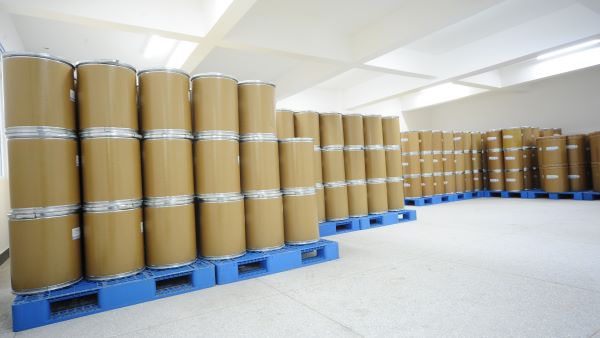
- Standard packaging: 1 kg / 5 kg / 25 kg amber glass jars or food-grade sealed containers.
- Custom packaging available on request (private labeling and bulk drums).
Shipping Terms
- Shipped worldwide via express (DHL, FedEx, UPS) or air freight for urgent orders.
- Sea freight available for bulk commercial shipments.
- Documentation includes COA, invoice, packing list, and certificate of origin.
Shelf Life & Storage
- Store in a cool, dry place away from direct sunlight and heat sources.
- Temperature recommendation: 2–8°C for optimal preservation.
- Keep container tightly sealed and protected from oxygen exposure.