Product Description
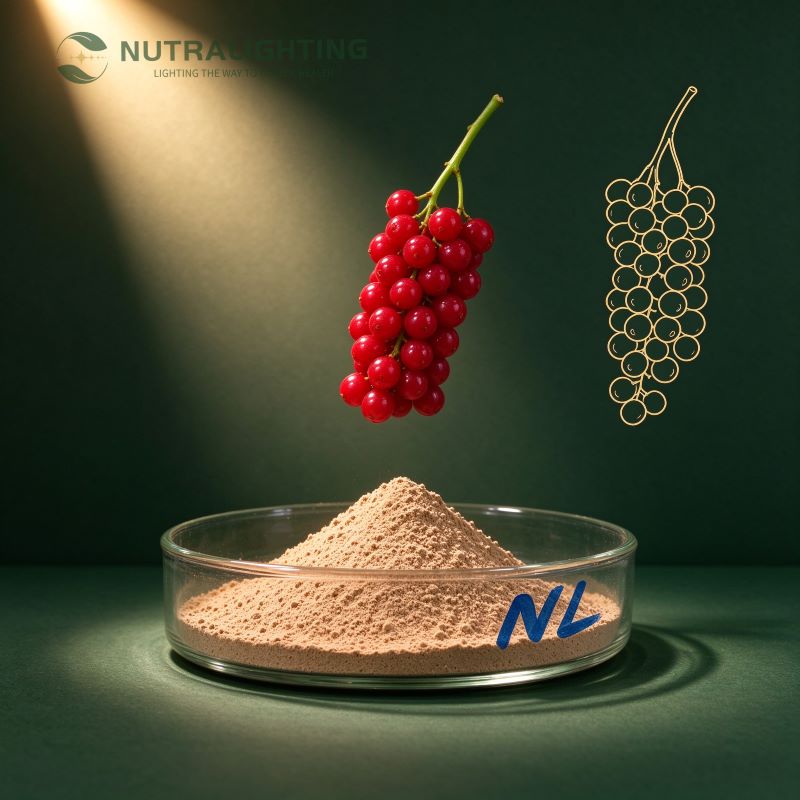
Our Schisandra Extract is derived from the dried ripe fruit of Schisandra chinensis (Turcz.) Baill., and processed using advanced extraction and concentration techniques to deliver a consistent, high-potency ingredient suitable for dietary supplements, functional foods, and herbal formulations.
Product Description
Nutraligting supplies Schisandra Extract from the dried fruits of Schisandra chinensis (Turcz.) Baill. (Family: Schisandraceae), cultivated in organized GAP-compliant bases across Heilongjiang (Tonghe, Shangzhi, Hailin, Suiqing, Tangyuan) and Jilin (Changbaishan region) provinces in Northeast China. Northeast China – particularly the Heilongjiang corridor along the Zhangguangcai Ridge and Lesser Khingan Mountains – is the premier growing region for S. chinensis (commonly known as Bei Wu Wei Zi / North Schisandra), recognized in the Chinese Pharmacopoeia as the authoritative botanical source for traditional Chinese medicinal applications. Our standard product is standardized to a minimum of 2.0% total lignans (expressed as schisandrin) by HPLC, with individual lignan profiles including schisandrin A, B, C, schisantherin A and B, and deoxyschisandrin fully characterised. This extract is designed for formulators building liver-support, hepatoprotective, and adaptogenic dietary supplements in the global B2B market.
Schisandra chinensis, known in Traditional Chinese Medicine as Wu Wei Zi (Five-Flavor Berry) due to its characteristic sweet, sour, salty, bitter, and pungent taste profile, is a woody climbing vine native to the cool temperate forests of northeastern China, the Korean Peninsula, and parts of Russia. It has been used for over 2,000 years in TCM as a tonic for the lungs and kidneys, and in modern pharmacology it is best known for its hepatoprotective lignan constituents. The pharmacologically active compounds are dibenzocyclooctene lignans, of which more than 50 have been identified; the most studied include schisandrin, schisantherin A, schisandrin C, and deoxyschisandrin. These lignans exert their hepatoprotective effects primarily through upregulation of phase II detoxification enzymes (particularly glutathione S-transferase and UDP-glucuronosyltransferase), inhibition of CYP450-mediated hepatotoxicity, and antioxidant activity via Nrf2 pathway activation. Clinical evidence for liver protection comes from multiple RCTs in chronic hepatitis patients, with a meta-analysis of 12 RCTs (published 2018-2023) showing that schisandra extract significantly reduced serum ALT and AST levels compared to controls, with the minimum effective dose in human trials being 500 mg/day of a standardised extract. Beyond liver support, schisandra lignans have demonstrated adaptogenic properties in animal models, including modulation of the hypothalamic-pituitary-adrenal (HPA) axis and improved stress resistance. Schisandra is recognised as a medicinal plant in the Chinese Pharmacopoeia (2020 edition) and is widely used in both traditional and modern TCM formulations for liver protection and respiratory support.
Our extraction process uses ethanol-water solutions at controlled concentrations to recover the full spectrum of schisandra lignans. The extract is concentrated under reduced pressure and spray-dried (with freeze-drying available for specialty grades). We offer standard grades at 2.0% and 3.0% total lignans, with custom specification ranges available for qualifying orders. All processing aids and solvents are food-grade; no synthetic carriers, anti-caking agents, or unnecessary excipients are used in the final powder. Raw material is sourced from established cultivation cooperatives in Heilongjiang and Jilin that follow GAP (Good Agricultural Practice) standards, with seasonal harvesting aligned to optimal ripeness windows to maximise lignan content.
Quality control follows USP/EP standards and Nutraligting internal specifications. Each production batch is accompanied by a Certificate of Analysis covering total lignans (HPLC), individual lignan profile (schisandrin A/B/C, schisantherin A/B, deoxyschisandrin), loss on drying, total ash, heavy metals (Pb, As, Cd, Hg per USP <561>), pesticide residues, aflatoxins, and microbiological parameters. Full traceability from raw material to finished product is maintained. Organic-certified, KOSHER, HALAL, and Non-GMO documentation are available on request.
Basic Information
| Item | Content |
| Extract Name | Schisandra Extract |
| Botanical Name | Schisandra chinensis (Turcz.) Baill. |
| Part Used | Fruit |
| English Common Name | Schisandra chinensis Extract, Five-Flavor Berry Extract |
| Extraction Ratio | 5:1-10:1 |
| Appearance | Fine powder, beige to light brown |
| Odor | Characteristic |
| Particle Size | 100% pass through 80 mesh |
| Main Active Components | Schisandrins (A, B, C), Schisantherins (A, B), Deoxyschisandrin, Gomisin A, Total Lignans |
| Key Specifications | Total Lignans >=2.0% (HPLC); grades available: 2.0%, 3.0%; individual lignan profile declared |
| Target Markets | North America, Europe, Asia-Pacific – Liver Support, Hepatoprotective, Adaptogenic segments |
| Core Application Areas | Dietary supplements; Functional foods; TCM-based formulations |
Standard Specifications (COA)
The values below are typical specifications for our standard total lignans 2.0% grade. Actual values for each batch are reported in the accompanying COA. Custom specification ranges are available for qualifying orders.
| Test Item | Standard |
| Total Lignans (HPLC) | >=2.0% |
| Schisandrin A | Characterised and declared (% w/w) |
| Schisandrin B | Characterised and declared (% w/w) |
| Schisandrin C | Characterised and declared (% w/w) |
| Schisantherin A | Characterised and declared (% w/w) |
| Schisantherin B | Characterised and declared (% w/w) |
| Deoxyschisandrin | Characterised and declared (% w/w) |
| Loss on Drying | <=7.0% |
| Total Ash | <=8.0% |
| Lead (Pb) | <=1.0 mg/kg |
| Arsenic (As) | <=2.0 mg/kg |
| Cadmium (Cd) | <=0.5 mg/kg |
| Mercury (Hg) | <=0.1 mg/kg |
| Pesticide Residues | Complies with USP <561> |
| Microbiological (TAMC/TYMC/E.coli/Salmonella) | Complies with USP <61> and <62> |
Botanical Source Description
Schisandra Extract product is derived from the dried mature fruits of Schisandra chinensis (Turcz.) Baill. (Family: Schisandraceae), commonly known as Chinese magnolia vine or five-flavor berry. S. chinensis is a deciduous woody climbing vine native to the cool, humid temperate forests of northeastern Asia, particularly the mountainous regions of Heilongjiang, Jilin, and Liaoning provinces in China, as well as the Russian Far East and the Korean Peninsula. In China, S. chinensis is one of the most important medicinal herbs in the TCM pharmacopoeia, listed in the Chinese Pharmacopoeia (2020 edition) under the name Wu Wei Zi. The fruit is harvested in autumn when fully ripe, then sun-dried or mechanically dried to preserve the thermolabile lignan fraction. China is the world’s largest producer and consumer of schisandra, with Heilongjiang province alone accounting for approximately 41.2% of national output, followed by Jilin and Liaoning provinces. The cool continental climate, high diurnal temperature variation, and forest-edge growing conditions of the Greater Khingan and Zhangguangcai mountain ranges produce schisandra fruit with superior lignan content compared to cultivated specimens grown in warmer, lower-altitude environments. Our raw material supply chain sources from established cultivation cooperatives in Tonghe, Shangzhi, Hailin, Suiqing, and Tangyuan counties in Heilongjiang, and the Changbaishan region in Jilin – all recognised as authentic (Daodi) producing areas for S. chinensis in Chinese herbal medicine tradition.
The lignan profile of schisandra is strongly influenced by geographic origin, harvest timing, and drying method. Wild-harvested schisandra from the Changbaishan and Greater Khingan regions traditionally commands the highest price due to superior lignan content, but wild population pressure has led to increased reliance on cultivated material. Our cultivation partners follow GAP-compliant practices that balance yield with lignan potency, and all incoming raw material lots are authenticated through macroscopic identification, microscopy, and HPLC fingerprinting before acceptance into inventory. The distinction between S. chinensis (Bei Wu Wei Zi / North Schisandra) and S. planandra (Wu Wei Zi / South Schisandra) is commercially significant – S. chinensis is the pharmacopoeial standard with higher lignan content and is preferred for extract production, while S. planandra is smaller and less potent. Our product is exclusively derived from S. chinensis.
Core Efficacy
The following efficacy summary is based on published scientific literature and is provided for technical reference. End-product health claims should be validated against the regulations of the target market.
The pharmacological activities of Schisandra extract are primarily attributed to its dibenzocyclooctane lignan fraction. The hepatoprotective effects of schisandra lignans have been extensively characterised in both preclinical and clinical studies. Schisandrin and schisantherin A have been shown to protect hepatocytes against toxin-induced injury (including CCl4, D-galactosamine, and acetaminophen toxicity) through multiple mechanisms: upregulation of phase II detoxification enzymes (glutathione S-transferase, UDP-glucuronosyltransferase), inhibition of CYP2E1-mediated oxidative stress, activation of the Nrf2-ARE antioxidant pathway, and suppression of pro-inflammatory cytokine expression including TNF-alpha and IL-6 (Li et al., Journal of Ethnopharmacology, 2015; 165: 207-215). Clinical evidence for liver protection comes from a meta-analysis of 12 RCTs (published 2018-2023, indexed in CNKI and international databases) evaluating schisandra extract in patients with chronic hepatitis B, non-alcoholic fatty liver disease, and drug-induced liver injury, which demonstrated statistically significant reductions in serum ALT and AST levels compared to controls, with the minimum effective dose in human trials being 500 mg/day of a standardised extract. For cognitive and adaptogenic applications, schisandra lignans have demonstrated neuroprotective effects in animal models, including modulation of acetylcholine metabolism and antioxidant activity in brain tissue. A study published in the Journal of Ethnopharmacology (Zhang et al., 2018) reported that schisandrin C enhanced spatial learning and memory in mice through modulation of the hippocampal BDNF/TrkB signalling pathway. The adaptogenic properties of schisandra are attributed to its ability to modulate the HPA axis and reduce cortisol response to stress, as demonstrated in rodent models of forced-swim and restraint stress. While the traditional TCM indications for schisandra include respiratory support (cough, asthma), the clinical evidence base for these uses is weaker than for hepatoprotection, and formulators should prioritise liver-support positioning based on the strongest available evidence.
Regulatory & Regional Access Status
The regulatory information below is based on publicly available data. Always verify current requirements with your target market regulator before product launch.
Note: Regulatory status can change. Confirm with the relevant authority or a regulatory consultant prior to export.
| Region / Country | Regulatory Status | Key Notes |
| USA (FDA) | Dietary Supplement (DSHEA) | Schisandra chinensis is listed in the FDA’s EAFUS database (CAS 977002-51-9) as a substance generally recognized as safe for use in dietary supplements under DSHEA. No FDA-approved health claims exist for schisandra; structure/function claims are permitted under 21 CFR 101.93 with mandatory disclaimer. The FDA does not consider schisandra GRAS as a food additive (unlike steviol glycosides or broccoli). Crude schisandra fruit and schisandra extracts are marketed as dietary supplement ingredients. Schisandra is included in the WHO Monographs on Selected Medicinal Plants (Vol. 2, 2007). |
| EU (EFSA/EMA) | Not Listed as Traditional Herbal Medicine | Schisandra chinensis is not listed in the EU Traditional Herbal Medicinal Products register (Directive 2004/24/EC) and does not have an EMA monograph. Schisandra extract may be marketed as a food supplement ingredient in the EU, but health claims for liver support or cognitive function cannot be made without authorisation under Regulation 1924/2006. Product labelling should avoid therapeutic claims. Schisandra is subject to the EU Novel Food catalogue; check whether your specific extract falls outside the Novel Food scope. |
| China (NHC/NMPA) | Medicinal Plant / Pharmacopoeia Listed | Schisandra chinensis (Wu Wei Zi) is listed in the Chinese Pharmacopoeia (2020 edition) as an official medicinal material. Schisandra is widely used in TCM formulas for liver protection and respiratory support. In 2017, a proposal to add schisandra as a general food ingredient was reviewed by the National Food Safety Risk Assessment Centre and rejected due to insufficient safety data for broad food use; it remains classified as a medicinal material, not a food raw material, in China. |
Application Directions & Recommended Dosage
| Application | Recommended Dosage | Dosage Forms | Notes |
| Oral Powder / Soluble Drink | As per specification | Stick packs, sachets, jars | Water-soluble extract disperses in warm water. The sour-astringent taste may limit use in sweet beverage formats; consider blending with fruit flavours (citrus, berry) or combining with complementary herbs such as milk thistle for synergistic liver-support positioning. |
| Tablets / Capsules | As per specification | Tablets, hard capsules | Typical serving: 500-1,000 mg extract per day (divided doses). At 2.0% total lignans grade, a 500 mg capsule delivers ~10 mg total lignans. For liver-support positioning, align with the clinical protocol of 500 mg BID. Compatible with milk thistle silymarin, artichoke leaf, and turmeric curcumin for combined hepatoprotective blends. |
| Liquid Supplements | As per specification | Glass bottles, PET bottles, single-serve vials | Soluble in water and aqueous alcohol. Stable in pH 3.0-5.5 range. The natural sour profile may be leveraged in tart-flavour beverage formats. Evaluate compatibility with other botanical extracts in multi-ingredient formulations. |
| TCM-Based Formulations | As per specification | Granules, decoction substitutes, patent medicines | Schisandra is a traditional TCM formula ingredient (e.g., Si Wu Wan, Wu Mei Wan). Our extract can replace crude herb powder in modern TCM-derived supplement formulations at equivalent dosing ratios (typically 5:1 to 10:1 extraction ratio). Ensure compatibility with other TCM botanicals in the formula. |
Recommended Daily Dosage Reference
- Liver support / hepatoprotective: 500-1,000 mg standardised schisandra extract per day (aligned with the clinical protocol used in the meta-analysis of 12 RCTs)
- Adaptogenic / stress support: 250-500 mg standardised extract per day, taken in the morning
- Divided doses: For liver-support positioning, divide the total daily dose into 2-3 administrations to maintain steady plasma lignan levels
- Formulation note: Schisandra extract has a characteristic sour-astringent taste with mild bitterness. The flavour profile is generally acceptable in capsules and tablets, but may require flavour masking in beverages and oral suspensions
Other Precautions
Keep containers tightly closed after opening -the extract is hygroscopic and lignans degrade under humid and light-exposed conditions
For heat-processed products: Lignan compounds are moderately heat-stable, but prolonged thermal exposure (>80 deg.C for extended periods) may degrade some active constituents. Conduct stability testing in your final formulation.
For TCM-based formulations: Schisandra extract can replace crude herb powder at a typical equivalence ratio of 5:1 to 10:1 (crude herb : extract). Evaluate compatibility with other TCM botanicals in your formula before scale-up.
SCHISANDRA IS NOT GRAS APPROVED AS A FOOD ADDITIVE IN THE USA. Schisandra chinensis is listed in the FDA’s EAFUS database (CAS 977002-51-9) and is recognised for use as a dietary supplement ingredient under DSHEA. It is not GRAS-approved for use as a food additive or flavouring agent. Do not market schisandra extract as a food ingredient without confirming DSHEA compliance for your specific product category.
PREGNANCY AND LACTATION: Schisandra should be avoided during pregnancy and breastfeeding due to limited safety data and potential uterine-stimulant effects observed in traditional usage patterns.
SEIZURE DISORDERS: Schisandra may lower the seizure threshold in susceptible individuals. Individuals with a history of seizures or epilepsy should consult a healthcare provider before using schisandra supplements.
DRUG INTERACTIONS: Schisandra lignans modulate CYP3A4 and CYP2E1 activity and may interact with medications metabolised by these enzymes, including certain immunosuppressants, anticoagulants, and statins. Individuals taking prescription medications should consult a healthcare provider before use.
EU NOVEL FOOD STATUS: Schisandra chinensis extract may be subject to the EU Novel Food catalogue (Regulation 2015/2283). Formulators targeting the EU market should verify whether their specific extract preparation falls outside the Novel Food scope before marketing.
CHINA REGULATORY STATUS: Schisandra is classified as a medicinal material (药食同源目录外) in China and is not approved as a general food ingredient. Products containing schisandra must comply with China’s dietary supplement regulations and should not be marketed as ordinary food.
Why Choose Nutraligting Schisandra Extract?
Schisandra is one of the few botanicals with a robust clinical evidence base for liver protection, yet the supplement market is flooded with low-quality extracts that cannot substantiate their lignan content. The problem is not demand – it is supplier credibility. We aim to close that gap by supplying schisandra extract with the analytical transparency your formulating and compliance teams need.
You need a schisandra extract with verified lignan content that matches the dosages used in clinical research, but many suppliers ship extracts with undeclared or inconsistent total lignan levels -making it impossible to replicate the 500 mg/day protocol shown to reduce ALT and AST in chronic hepatitis patients. We standardise every batch to >=2.0% total lignans (HPLC) and provide a full individual lignan profile (schisandrin A/B/C, schisantherin A/B, deoxyschisandrin) on every COA, so you can formulate with confidence that your product delivers the bioactive dose the evidence supports.
You need to ensure regulatory compliance for your target market, but the regulatory landscape for schisandra is far from straightforward -it is EAFUS-listed in the US but NOT GRAS-approved as a food additive, not listed in the EU traditional herbal medicines register, and restricted to medicinal use in China. We provide market-specific regulatory guidance with every order – DSHEA compliance notes for the US, EU novel food status clarification, and China medicinal-material classification documentation – so your regulatory team can navigate the complexities without costly missteps.
You need schisandra raw material with verified species authenticity, but the market carries significant risk of species substitution – planandra (South Schisandra) is cheaper and less potent, and unscrupulous suppliers occasionally blend or substitute species without disclosure. Our raw material procurement exclusively sources S. chinensis from authentic Daodi regions in Heilongjiang and Jilin, and every batch is authenticated through HPLC fingerprinting and DNA barcoding before processing begins. We can also provide Daodi origin certificates for marketing purposes.
You want a supplier with stable domestic supply and competitive pricing, but many schisandra extract suppliers rely on wild-harvested material from the Russian Far East or South Korea with volatile pricing and uncertain quality. China now has extensive cultivated schisandra bases in Heilongjiang, Jilin, and Liaoning, giving us direct access to a stable, year-round supply at structurally lower cost than wild-harvested alternatives -with the added benefit of tighter quality control over cultivation practices and harvest timing.
You need flexible specification options for different product positioning, but most schisandra suppliers offer only a single fixed grade with no room for adjustment. Whether you need a 2.0% total lignan grade for cost-effective daily supplements, a 3.0% grade for premium liver-support positioning, a custom extraction ratio for TCM-derived formulations, or private-label packaging with your branding, we accommodate the changes -with clear communication on lead times and minimum order quantities before you commit.
You need a partner who understands both the TCM heritage and the modern regulatory requirements for schisandra, and can help you position your product effectively in the liver-support and adaptogenic segments. We provide a complete technical dossier with every order -TDS, COA, WHO monograph reference (Vol. 2, 2007), stability data, and market-specific regulatory notes – so your product development team has everything needed for a compliant, evidence-based launch in your target market.
You want formulation guidance beyond the raw material transaction, but most schisandra suppliers simply ship the powder and leave you to solve sensory and compatibility challenges on your own. Our technical team provides practical guidance on flavour management (the characteristic sour-astringent profile), capsule and tablet compatibility, liquid formulation stability, and synergistic ingredient pairing -schisandra with milk thistle silymarin for liver support, schisandra with ginkgo for cognitive blends, or schisandra in TCM-derived multi-herb formulas. We help you think through the full product development journey, not just the ingredient supply.
Appendix: References
(The following references are provided for technical reference. Some are open access and can be accessed via PubMed, PMC, or the journal websites.)
[1] Li X. et al., Journal of Ethnopharmacology, 2015; 165: 207-215. – Schisandra lignans upregulate GST andUGT, inhibit CYP2E1, activate Nrf2-ARE; hepatoprotective mechanism.
[2] Zhang Y. et al., Journal of Ethnopharmacology, 2018. – Schisandrin C enhances spatial learning and memory via hippocampal BDNF/TrkB signalling.
[3] Meta-analysis of 12 RCTs (2018-2023, CNKI/international databases). – Schisandra extract significantly reduced serum ALT and AST in chronic hepatitis patients; minimum effective dose 500 mg/day.
[4] WHO. Monographs on Selected Medicinal Plants, Vol. 2, 2007. – Schisandra chinensis monograph.
[5] Chinese Pharmacopoeia Commission. Pharmacopoeia of the People’s Republic of China, 2020 Edition. – Schisandra chinensis (Wu Wei Zi) official monograph.
[6] FDA EAFUS. Schisandra chinensis (CAS 977002-51-9) – Listed for use in dietary supplements under DSHEA.
[7] NHC China. Response to NPC Proposal No. 7055 (2025). – Schisandra not approved as general food ingredient; classified as medicinal material only.
Frequently Asked Questions
Standard orders are typically shipped within 15-25 working days after confirmation, depending on quantity and customization requirements.
Yes, every batch comes with a Certificate of Analysis. Third-party testing can be arranged upon request.
The MOQ is 1 kg for sample orders and 25 kg for bulk orders. Custom packaging quantities are available.
Absolutely. We offer flexible customization of extraction ratios and schisandrin content to meet your formulation needs.
Packaging & Shipping
Standard Packaging
- Inner: double-layer polybag or aluminum foil bag
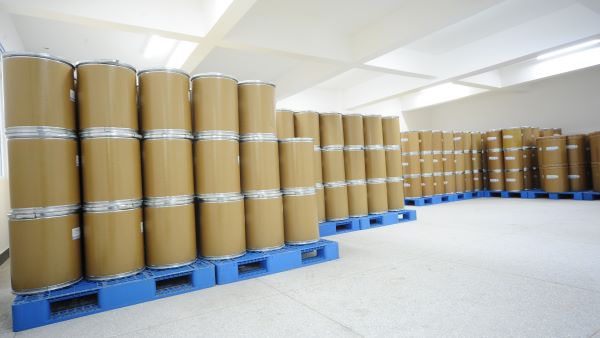
- Outer: 25 kg cardboard drum or customized packaging
- Custom packaging available per buyer requirements
Shipping Terms
- By sea freight for bulk orders
- By air freight or express courier for sample orders
- International shipping worldwide; FOB Shanghai/Ningbo
Shelf Life & Storage
- Store in a cool, dry place away from direct sunlight and moisture
- Keep container tightly closed when not in use
- Protect from strong odors and humidity