Product Description
European traditional herb for emotional health listed in Germany’s Commission E – supports mild to moderate emotional relief through Hyperforin multi-transmitter reuptake inhibition mechanism.
Product Description
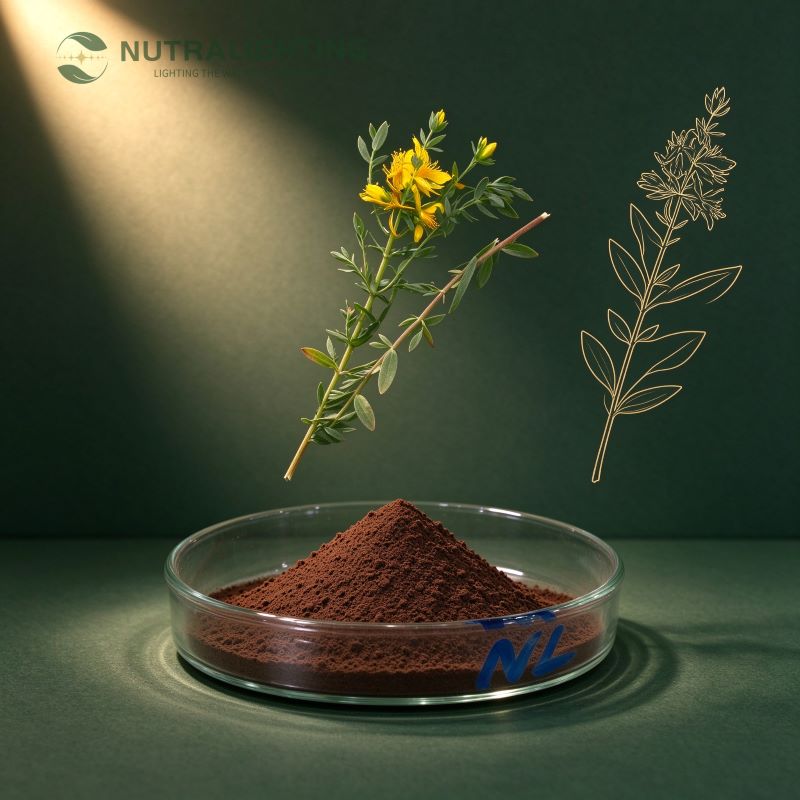
Nutraligting supplies a premium standardized St. John’s Wort extract from the dried aerial parts (flowers, leaves, and stems) of Hypericum perforatum L. (Family: Hypericaceae), cultivated in organized planting bases across Yunnan, Guizhou, Sichuan, and Gansu provinces, China. Our standard product is standardized to 0.3% hypericin by UV spectrophotometry, with a defined range of hyperforin content and complementary flavonoid profile, reflecting the composition studied in the major European clinical trials. This extract is designed for formulators developing dietary supplements and botanical medicinal products targeting mood support and emotional wellness in the global B2B market.
St. John’s Wort (Hypericum perforatum) is one of the most extensively researched herbal ingredients in the world, with a documented history of use in European herbalism and traditional Chinese medicine spanning over a millennium. The flowering aerial parts are the medicinal portion, containing naphthodianthrones (principally hypericin and pseudohypericin), phloroglucinols (notably hyperforin), and a complex array of flavonoids including quercetin, hyperoside, rutin, and miquelianin. The clinical efficacy of standardized H. perforatum extracts has been demonstrated in numerous randomized controlled trials and meta-analyses, particularly for mild-to-moderate mood complaints. Germany’s Commission E and the European Medicines Agency (EMA) have both evaluated H. perforatum for traditional and well-established medicinal use. In China, H. perforatum is cultivated in southwestern and northwestern regions where the climate closely resembles its native Eurasian habitat, providing a reliable domestic supply source for the global botanical extract market.
Our manufacturing process uses food-grade hydroalcoholic extraction at controlled temperatures to selectively recover the hypericin, hyperforin, and flavonoid fractions. The extract is concentrated under reduced pressure and spray-dried into a free-flowing powder. We standardize every batch to a minimum of 0.3% hypericin (by UV) and provide declared hyperforin content on the COA, as hyperforin levels vary significantly between botanical sources and extraction methods. Custom specification ranges, including high-hyperforin variants, are available for qualifying orders. Quality control follows USP/EP standards and Nutraligting internal specifications. Each production batch is accompanied by a Certificate of Analysis covering hypericin content (UV), hyperforin content (HPLC where applicable), total flavonoids, loss on drying, total ash, heavy metals (Pb, As, Cd, Hg per USP <561>), pesticide residues, aflatoxins, and microbiological parameters.
Basic Information
| Item | Content |
| Extract Name | St. John’s Wort Extract |
| Latin Name | Hypericum perforatum L. |
| Part Used | Flowering herb |
| English Common Name | Hypericum Extract |
| Appearance | Brown to dark brown powder |
| Solubility | Partially soluble in water; soluble in ethanol |
| Particle Size | 80-100 mesh |
| Main Active Components | Hypericin, Hyperforin, Pseudohypericin, Flavonoids (quercetin, hyperoside, rutin, miquelianin) |
| Key Specifications | Hypericin ≥0.3% (UV); Hyperforin content declared per batch (HPLC) |
| Target Markets | Europe, North America, Asia-Pacific – Mood Support & Emotional Wellness segment |
| Core Application Areas | Dietary supplements; Botanical medicinal products; Mood-support formulations |
Standard Specifications (COA)
The values below are typical specifications for our standard 0.3% hypericin grade. Actual values for each batch are reported in the accompanying COA. Custom specification ranges are available for qualifying orders.
| Test Item | Standard |
| Hypericin (UV, 0.3% standard) | ≥0.30% |
| Hyperforin (HPLC, where applicable) | Declared per batch (typical: 2.0%-5.0%) |
| Pseudohypericin | Present (typically 20%-40% of hypericin content) |
| Total Flavonoids | ≥2.0% (expressed as rutin equivalent) |
| Loss on Drying | ≤6.0% |
| Total Ash | ≤8.0% |
| Lead (Pb) | ≤1.0 mg/kg |
| Arsenic (As) | ≤2.0 mg/kg |
| Cadmium (Cd) | ≤0.5 mg/kg |
| Mercury (Hg) | ≤0.1 mg/kg |
| Pesticide Residues (Organochlorine/Organophosphorus) | Complies with USP <561> |
| Aflatoxin B1 | ≤5.0 μg/kg |
| Total Aflatoxins | ≤10.0 μg/kg |
| Total Microbial Count (TAMC) | ≤1×10⁴ CFU/g |
| Yeasts and Molds (TYMC) | ≤1×10² CFU/g |
| E. coli / Salmonella | Negative in 1g |
Botanical Source Description
St. John’s Wort Extract product is derived from the dried flowering aerial parts of Hypericum perforatum L. (Family: Hypericaceae), commonly known as St. John’s Wort. H. perforatum is native to Europe and western Asia and has naturalized in many temperate regions worldwide. In China, H. perforatum is cultivated primarily in Yunnan, Guizhou, Sichuan, and Gansu provinces, where the temperate-highland climate and altitude range (1,000-2,500 meters) provide conditions suitable for commercial cultivation. As of 2024, the total cultivated area in China reached approximately 87,000 mu (about 5,800 hectares), with Yunnan province accounting for the largest share at 32,000 mu (36.8% of national total). The raw material is harvested during the flowering stage (June-September), when hypericin and hyperforin content peaks, then dried and processed under controlled conditions to preserve the bioactive constituents. It is important to note that H. perforatum is classified as an invasive species in some North American jurisdictions – our supply chain ensures compliance with all import and handling regulations in destination markets.
Core Efficacy
The following efficacy summary is based on published scientific literature and is provided for technical reference. End-product health claims should be validated against the regulations of the target market.
The mood-support properties of St. John’s Wort extract are primarily attributed to its hypericin, hyperforin, and flavonoid content. The mechanism of action involves inhibition of neurotransmitter reuptake – particularly serotonin, dopamine, and norepinephrine – through a novel binding site distinct from that of conventional SSRIs, as well as modulation of GABAergic and glutamatergic signaling (Butterweck, CNS Drugs, 2003; 17(8): 539-562). Hyperforin is considered the key compound responsible for this broad-spectrum reuptake inhibition, while hypericin and flavonoids contribute antioxidant and neuroprotective effects. The landmark GermanDEPRES I and II trials (Linde et al., Lancet, 1996; 348: 144-149 and 153-158) demonstrated that a standardized H. perforatum extract (300 mg TID, 0.3% hypericin) was superior to placebo and comparable to standard antidepressants (imipramine and sertraline) in patients with mild-to-moderate depression, with a more favorable side-effect profile. A Cochrane systematic review (Linde et al., Cochrane Database of Systematic Reviews, 2008; CD000448) encompassing 29 randomized controlled trials with 5,489 participants concluded that H. perforatum extracts are more effective than placebo and similarly effective to standard antidepressants for acute treatment of depression in adults, with fewer discontinuations due to side effects. For nervous tension and sleep complaints, EMA-recognized traditional-use indications are supported by long-standing use data rather than clinical trial evidence. Additional research has explored H. perforatum extracts for topical use in mild-to-moderate psoriasis, showing reduced erythema and scaling through TNF-α modulation (Mansouri et al., J Postgrad Med, 2017; 63(4): 215-220). It is important to note that some clinical trials (e.g., Rapaport et al., J Psychiatr Res, 2011) have not demonstrated efficacy over placebo in certain populations or depression severities, highlighting the importance of proper standardization and dose selection.
Regulatory & Regional Access Status
The regulatory information below is based on publicly available data. Always verify current requirements with your target market regulator before product launch.
Note: Regulatory status can change. Confirm with the relevant authority or a regulatory consultant prior to export.
| Region / Country | Regulatory Status | Key Notes |
| USA (FDA) | Dietary Supplement | St. John’s Wort (Hypericum perforatum) is marketed as a dietary supplement ingredient under DSHEA. It is not approved by the FDA for the treatment, diagnosis, cure, or prevention of any disease. The FDA does not approve dietary supplements before they are marketed. Structure/function claims are permitted under 21 CFR 101.93 with the mandatory disclaimer. The FDA has issued warnings about the potential for serious drug interactions (see Safety & Compliance section). Because of its CYP3A4 and P-glycoprotein induction effects, the FDA and healthcare authorities recommend that consumers taking St. John’s Wort inform their healthcare providers, especially if they are taking prescription medications. |
| EU (EFSA/EMA) | Traditional Herbal Medicine / Well-Established Use | The EMA has adopted a Union herbal monograph for Hypericum perforatum L., herba (EMA/HMPC/7695/2021), covering both well-established medicinal use and traditional use. For well-established use: indicated for symptomatic relief of mild depressive states, nervous tension, and sleep disturbances. For traditional use: same indications based on long-standing use. The EMA specifies that daily hyperforin intake for traditional-use products must be below 1 mg. EFSA has not authorized a specific nutrition or health claim for H. perforatum under Regulation 1924/2006. Products must comply with Directive 2001/83/EC (medicinal products) or Directive 2002/46/EC (food supplements), depending on the intended positioning. Germany permits H. perforatum preparations as both prescription and OTC medicinal products under Commission E approval. |
| China (NHC/NMPA) | Pharmacopoeial Herb / Health Food Raw Material | Hypericum perforatum is not yet formally listed in the Chinese Pharmacopoeia but is recognized in regional materia medica and used in traditional herbal formulations. China is an active cultivation region with established growing bases in Yunnan, Guizhou, Sichuan, and Gansu provinces. Export compliance should follow target market regulations. |
Application Directions & Recommended Dosage
Recommended Daily Dosage Reference
- Mood support / emotional wellness: 300 mg standardized extract (0.3% hypericin) three times daily -aligning with the DEPRES I/II clinical trial protocol, delivering approximately 0.9 mg hypericin per day
- Nervous tension / sleep support: 300-600 mg once or twice daily, consistent with EMA traditional-use dosage recommendations for Hypericum perforatum herbal preparations
- Functional food / beverage: 0.1%-0.5% (w/w) in powdered or liquid formulations; evaluate color intensity and taste compatibility in final product (the extract has a characteristic reddish-brown color and bitter taste)
- Formulation note: The extract is soluble in water and aqueous alcohol. For products requiring lower hyperforin content (e.g., EU traditional-use positioning with hyperforin <1 mg/day), specify low-hyperforin grades with your supplier.
| Application | Recommended Dosage | Dosage Forms | Notes |
| Oral Powder / Soluble Drink | As per specification | Stick packs, sachets, jars | The reddish-brown color of the extract may affect product appearance. Water-soluble variants available. Compatible with L-theanine, GABA, or valerian for comprehensive mood-support blends. Taste masking may be required due to the characteristic bitter profile. |
| Tablets / Capsules | As per specification | Tablets, hard capsules | Typical serving: 300 mg extract TID (900 mg/day total), matching the DEPRES clinical protocol. At 0.3% hypericin grade, each 300 mg capsule delivers ~0.9 mg hypericin. For EU traditional-use products, ensure hyperforin content per daily dose remains below 1 mg. |
| Liquid Supplements / Functional Beverages | As per specification | Glass bottles, PET bottles | Soluble in water and dilute alcohol. Stable in pH 3.0-6.5 range. The natural reddish-brown color and bitter taste may limit use in clear or sweet beverage formats. Consider our water-soluble graded variant for better compatibility. |
| Topical / Skin Care (Psoriasis Support) | As per specification | Creams, ointments, balms | Topical H. perforatum preparations have been studied for mild-to-moderate plaque psoriasis, showing reduced erythema and scaling. The extract can be incorporated into oil-infused or emulsion-based topical formulations. This application is more common in the EU where H. perforatum topical products are available as OTC medicines. |
Other Precautions
- Keep containers tightly closed and protected from light -hypericin is highly photosensitive and degradation occurs upon prolonged UV or intense visible-light exposure
- For heat-processed products (>70°C): Hypericin is moderately heat-stable, but prolonged thermal exposure may affect hyperforin content. Evaluate stability in your final formulation before scale-up.
- For topical formulations: The extract can be incorporated into oil-based or emulsion systems. Avoid direct UV exposure during manufacture and storage to prevent photodegradation.
- John’s Wort is marketed as a dietary supplement in the US and is not approved by the FDA for the treatment, diagnosis, cure, or prevention of any disease. Structure/function claims must comply with 21 CFR 101.93 and include the mandatory disclaimer.
- CRITICAL DRUG INTERACTION WARNING: H. perforatum is a potent inducer of CYP3A4 and P-glycoprotein (via hyperforin activation of the pregnane X receptor). This can dramatically reduce the plasma concentrations and therapeutic efficacy of numerous prescription medications, including oral contraceptives, anticoagulants (warfarin), immunosuppressants (cyclosporine, tacrolimus), antiretrovirals (HIV protease inhibitors, NNRTIs), statins, digoxin, and certain chemotherapy agents. Brand owners must ensure adequate warning labeling and recommend that consumers consult healthcare providers before use.
- Serotonin syndrome risk: Concurrent use of H. perforatum with SSRIs, SNRIs, MAO inhibitors, triptans, or other serotonergic agents may precipitate serotonin syndrome -a potentially life-threatening condition. Products should carry appropriate warnings against concurrent use with prescription antidepressants.
- Photosensitivity: H. perforatum can cause photosensitivity reactions, particularly at high doses or with prolonged sun exposure. Users should be advised to limit sun exposure and use sunscreen. This is a well-documented adverse effect.
- Pregnancy and lactation: Safety data in pregnant or breastfeeding women are insufficient. Pregnant individuals should consult a healthcare provider before using H. perforatum supplements.
- Bipolar disorder and schizophrenia: H. perforatum may exacerbate symptoms in patients with bipolar disorder or schizophrenia. Products should carry appropriate warnings for these populations.
Why Choose Nutraligting St. John’s Wort Extract?
Nutraligting aims to become a trusted global partner for St. John’s Wort extract in the mood-support and emotional-wellness ingredient segments. Below are the reasons our B2B customers choose us:
- You face challenges with the characteristic reddish-brown color and bitter taste of St. John’s Wort extract in your formulation, but most suppliers simply ship the powder and leave you to solve the formulation issues. We offer both standard and water-soluble graded variants, along with practical formulation guidance for capsules, powders, beverages, and topical formats -including flavor-masking strategies and color-management approaches that your formulators can apply immediately.
- You need a supplier with competitive pricing and reliable supply, but many St. John’s Wort extract suppliers source from wild-harvested European material with unpredictable quality and pricing. China now has over 87,000 mu of organized H. perforatum cultivation across Yunnan, Guizhou, Sichuan, and Gansu provinces, giving us direct access to a stable, domestically-sourced supply at competitive prices -without the volatility of wild-harvest procurement.
- You need flexible customization for your specific formulation and market requirements, but many suppliers offer only fixed specifications with no room for adjustment. Whether you need a low-hyperforin grade for EU traditional-use positioning, a high-hyperforin variant for stronger clinical activity, a custom extraction ratio, or private-label packaging with your branding, we accommodate the changes -with clear communication on lead times and minimum order quantities before you commit.
Appendix: References
(The following references are provided for technical reference. Some are open access and can be accessed via PubMed, PMC, or the journal websites.)
[1] Linde K. et al., The Lancet, 1996; 348: 144-149 and 153-158. – DEPRES I and II randomized controlled trials: standardized H. perforatum extract (300 mg TID, 0.3% hypericin) superior to placebo and comparable to imipramine/sertraline in mild-to-moderate depression.
[2] Linde K. et al., Cochrane Database of Systematic Reviews, 2008; CD000448. – Cochrane review of 29 RCTs (5,489 participants): H. perforatum more effective than placebo and similarly effective to standard antidepressants for acute depression treatment.
[3] Butterweck V., CNS Drugs, 2003; 17(8): 539-562. – Mechanism of action review: neurotransmitter reuptake inhibition, GABA modulation, and contribution of hyperforin vs. hypericin.
[4] Nicolussi S. et al., British Journal of Pharmacology, 2020; 177(6): 1212-1226. – Clinical relevance of St. John’s Wort drug interactions: CYP3A4 and P-glycoprotein induction mechanisms and clinical implications.
[5] EMA/HMPC/7695/2021. – European Union herbal monograph on Hypericum perforatum L., herba (well-established use and traditional use).
[6] Mansouri P. et al., Journal of Postgraduate Medicine, 2017; 63(4): 215-220. – Topical H. perforatum for mild-to-moderate plaque psoriasis: TNF-α modulation and clinical improvement.
[7] Rapaport M.H. et al., Journal of Psychiatric Research, 2011; 45(7): 931-941. – RCT: failure to show benefit of St. John’s Wort over placebo in minor depression, highlighting variability in clinical outcomes.
[8] StatPearls [NCBI Bookshelf]. St. John’s Wort. Last updated May 2023. – Comprehensive review of pharmacology, clinical evidence, safety, drug interactions, and dosing.
Frequently Asked Questions
Standard lead time is 15-25 working days after order confirmation, depending on quantity and packaging requirements.
Yes. A Certificate of Analysis (COA) is provided for each batch, and we support third-party lab testing upon request.
MOQ varies by specification; generally 1kg for sample orders and 25kg for bulk commercial orders.
Yes. We can adjust hypericin and hyperforin concentrations according to your specifications.
Yes. Our extract is 100% plant-derived, vegan-friendly, and non-GMO tested.
Packaging & Shipping
Standard Packaging
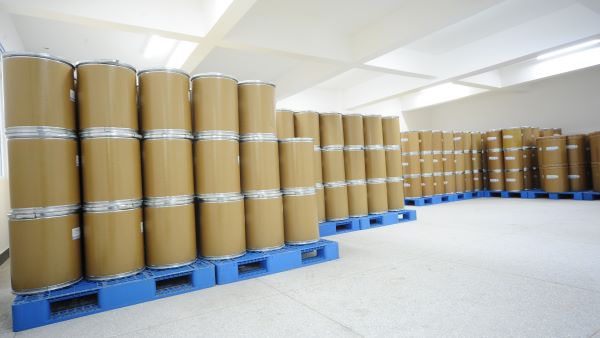
- 25kg drum lined with double PE bags
- 1kg/aluminum foil bag with two inner plastic bags
- Custom packaging available upon request
Shipping Terms
- Express (DHL, FedEx, UPS): 3-7 business days
- Air freight: 5-10 business days
- Sea freight: 20-35 business days
- Global shipping available with full export documentation
Shelf Life & Storage
- Store in a cool, dry place away from direct sunlight and heat
- Keep container tightly closed when not in use
- Shelf life: 24 months from date of manufacture when stored properly