Product Description
Plumbagin is a highly active naphthoquinone research compound; it is currently authorised for use solely in scientific research and is strictly prohibited from direct use in human clinical trials, for consumption, or as an additive in general household and personal care products.
Basic Information
| Item | Content |
| Botanical Name | Drosera rotundifolia L. (also D. anglica) |
| Plant Family | Droseraceae (carnivorous plant family) |
| Part Used | Whole aerial parts (leaves and flowers) |
| Extraction Solvent | Ethanol-water (food-grade) |
| Extraction Ratio | 10:1 standard concentrate (equivalent to 10 kg herb → 1 kg extract) |
| Available Grades | 2% / 5% / 10% Plumbagin (GC-MS verified) |
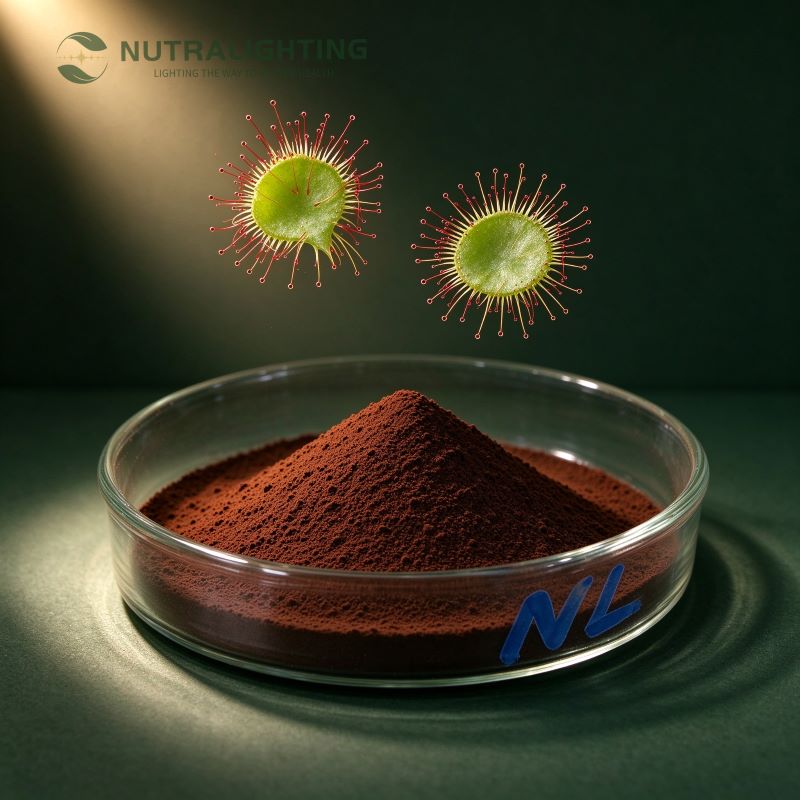
| Appearance | Fine brown to dark-brown powder |
| Odor | Characteristic botanical odor |
| Taste | Slightly bitter |
| Moisture | ≤ 5.0% (LOD) |
| Ash | ≤ 8.0% (total ash) |
| Heavy Metals | Pb ≤ 2.0 mg/kg; As ≤ 1.0 mg/kg; Hg ≤ 0.1 mg/kg; Cd ≤ 0.3 mg/kg |
| Microbial | Total plate count ≤ 10,000 CFU/g; Yeast & mold ≤ 1,000 CFU/g; E. coli negative; Salmonella negative |
| Particle Size | 95% passes through 80-mesh sieve |
| Lead | ≤ 0.5 mg/kg (ICH Q3D compliant) |
| Arsenic | ≤ 0.5 mg/kg (ICH Q3D compliant) |
| Mercury | ≤ 0.1 mg/kg |
| Cad Leadium | ≤ 0.3 mg/kg |
| Target Market | Dietary supplements, respiratory wellness products, herbal cough formulations, topical products |
| Core Application Areas | Respiratory support, cough relief, anti-inflammatory support, antioxidant protection, antimicrobial support |
Product Description
Sundew Extract is derived from Drosera rotundifolia L., a small carnivorous plant native to northern latitudes across Europe, North America, and parts of northern China. The plant traps insects using glandular tentacles covered in sticky mucilage. This mucilage contains a rich profile of bioactive compounds, including naphthoquinones, flavonoids, and phenolic acids.
We supply Sundew Extract in three distinct plumbagin grades – 2%, 5%, and 10%. Each grade targets a different stage of product development. The 2% grade is designed for mild daily respiratory support blends. The 5% grade represents our most widely requested specification, aligning with clinical research doses. The 10% grade delivers a concentrated profile for premium cough and respiratory formulations.
Sundew has a long history in folk medicine. Indigenous peoples of North America used dried sundew for coughs and lung ailments. European herbalists incorporated it into expectorant syrups alongside thyme and ivy. Today, it remains a staple ingredient in traditional respiratory formulations across multiple markets.
Active Constituents
The biological activity of Sundew Extract is attributed to a complex blend of secondary metabolites. These compounds are produced as defense mechanisms against insect prey. They also confer the characteristic pharmacological properties valued in herbal medicine.
Primary Marker: Plumbagin (1,4-naphthoquinone)
Plumbagin is the dominant 1,4-naphthoquinone found in Drosera species. It serves as the main quality marker for our extract. GC-MS analysis confirms plumbagin content at 2%, 5%, or 10% depending on the grade selected. Plumbagin is responsible for the pronounced antimicrobial and anti-inflammatory properties of sundew.
A 2024 study published in PMC documented plumbagin production across four Drosera species. D. indica and D. regia also produce ramentaceone, an isomer of plumbagin with additional industrial application potential. Our extract standardizes on D. rotundifolia, which produces plumbagin as the exclusive major naphthoquinone.
Secondary Markers: and Rosmarinic Acid
- rotundifolia contains a diverse flavonoid profile. The most prominent flavonoid is 2″-O-galloylhyperoside, along with quercetin, isoquercitrin, hyperoside, and myricetin-3-O-glucopyranoside. A 2010 LC-MS study identified 13 distinct flavonoid compounds in therapeutically important Drosera species. Three of these had not been previously reported for the genus.
Rosmarinic acid is also present in measurable quantities. Commercial supplier COAs routinely report both rosmarinic acid and total flavonoid content. These two parameters serve as complementary quality indicators alongside plumbagin.
Ellagic acid and its glycoside and methyl derivatives are also detected in sundew extracts. These compounds contribute to the overall antioxidant capacity of the product.
Other Constituents
Sundew also contains mucilage glycosides (including the antispasmodic compound rossoliside), enzymes, vitamin C, and trace essential oils. These constituents work synergistically to support the plant’s traditional use in respiratory care formulations.
| Item | Specification | Method | Result Range |
| Plumbagin (GC-MS) | 2% / 5% / 10% | GC-MS | As specified |
| Total Flavonoids | ≥ 3.0% (2% grade); ≥ 6.0% (5% grade); ≥ 12.0% (10% grade) | NaNO2-AlCl3 | As specified |
| Total Polyphenols | ≥ 8.0% (2% grade); ≥ 15.0% (5% grade); ≥ 25.0% (10% grade) | Folin-Ciocalteu | As specified |
| Rosmarinic Acid | ≥ 0.5% | HPLC-UV 280nm | ≥ 0.5% |
| Quercetin | ≥ 0.3% | HPLC-UV 360nm | ≥ 0.3% |
| Isoquercitrin | ≥ 0.2% | HPLC-UV 360nm | ≥ 0.2% |
| Hyperoside | ≥ 0.2% | HPLC-UV 360nm | ≥ 0.2% |
| 2”’-O-Galloylhyperoside | ≥ 0.5% | HPLC-UV 280nm | ≥ 0.5% |
| Ellagic Acid | ≥ 0.1% | HPLC-UV 254nm | ≥ 0.1% |
| Moisture | ≤ 5.0% | LOD | ≤ 5.0% |
| Total Ash | ≤ 8.0% | IP | ≤ 8.0% |
| Lead (Pb) | ≤ 0.5 mg/kg | ICP-MS | ≤ 0.5 mg/kg |
| Arsenic (As) | ≤ 0.5 mg/kg | ICP-MS | ≤ 0.5 mg/kg |
| Mercury (Hg) | ≤ 0.1 mg/kg | ICP-MS | ≤ 0.1 mg/kg |
| Cadmium (Cd) | ≤ 0.3 mg/kg | ICP-MS | ≤ 0.3 mg/kg |
Mechanism of Action
Antimicrobial Action
Plumbagin exerts broad-spectrum antimicrobial activity. It disrupts microbial cell membranes and interferes with enzyme function. Research demonstrates efficacy against antibiotic-resistant strains, including MRSA. This property supports sundew’s traditional use in respiratory infections where pathogenic bacteria contribute to symptoms.
Anti-inflammatory and Antispasmodic Effects
Sundew flavonoids inhibit NF-κB signaling pathways. This reduces the production of pro-inflammatory cytokines such as TNF-α and IL-6. The mucilage glycosides, including rossoliside, exert antispasmodic effects on smooth muscle. This action helps relieve the harsh, uncontrollable coughing fits characteristic of whooping cough and acute bronchitis.
Ciliary Function and Respiratory Support
A 2022 study published in PMC investigated the effects of D. rotundifolia extracts on ciliary beat frequency and airway smooth muscle. The flavonoid-rich extract enhanced ciliary beating action. Improved ciliary function aids mucociliary clearance. This mechanism supports the traditional expectorant use of sundew in respiratory formulations.
Antioxidant Capacity
The combined flavonoid and phenolic acid profile provides direct free radical scavenging activity. These compounds also modulate the Nrf2 antioxidant pathway. This dual action helps protect respiratory epithelial tissue from oxidative stress during inflammatory episodes.
Traditional and Modern Use
Sundew has been used medicinally for centuries. North American Indigenous peoples prepared infusions from dried whole plants. They administered these preparations for coughs, bronchitis, and whooping cough. European herbal traditions similarly employed sundew as an expectorant and antispasmodic remedy for respiratory complaints.
In modern herbal practice, sundew remains a valued ingredient in cough syrups and throat lozenges. It is frequently combined with thyme, ivy leaf, and pelargonium in European OTC respiratory products. The combination leverages complementary mechanisms – thyme provides antimicrobial support while sundew addresses the spasmodic component of cough.
Clinical interest in sundew has shifted toward understanding plumbagin’s role in antimicrobial resistance. Recent research explores plumbagin-silver nanoparticle combinations as alternatives for treating resistant wound infections. This extends sundew’s application beyond respiratory care into topical antimicrobial formulations.
Key Safety and Operation Precautions
Absolute Usage Boundary: All commercially available products are clearly labeled “For research use only. Not applicable to human/animal clinical diagnosis and treatment, or food addition”. Unauthorized oral administration or external application by individuals is a violation of regulations and poses high safety risks.
Acute Toxicity Risk: Classified as GHS hazard category H301 (Toxic if swallowed). Accidental ingestion can rapidly trigger vomiting, severe abdominal pain, and in severe cases, central nervous system paralysis, respiratory depression, sharp blood pressure drop, or even cardiac arrest.
Strong Corrosive Irritation: Direct contact with skin or eyes may cause severe chemical burns, leading to redness, blisters, and conjunctival hyperemia. Inhalation of the dust will intensely irritate the upper respiratory tract, resulting in cough and dyspnea.
Long-term Toxicity Hazard: Long-term low-dose exposure may cause liver and kidney function damage, manifested as elevated transaminase levels and renal tubular proteinuria. It also has definite reproductive toxicity, which can induce miscarriage in pregnant women.
Operation Protection Requirements: Throughout the experiment, goggles, nitrile protective gloves and gas masks must be worn, and all operations must be conducted in a fume hood. Eating and drinking are strictly prohibited. In case of skin/eye contact, rinse with plenty of clean water for more than 15 minutes and seek medical attention immediately. Never induce vomiting after accidental ingestion.
Storage Specification: The powder must be sealed and locked in a light-proof and dry environment at -20℃. Prepare the working solution freshly for immediate use, and avoid repeated freezing and thawing which will cause activity failure.
Disclaimer
This product is not intended to diagnose, treat, cure, or prevent any disease. Statements regarding this product have not been evaluated by the Food and Drug Administration.
Drosera rotundifolia is not approved as a drug by the FDA. It is marketed as a dietary supplement ingredient or traditional herbal medicinal product where applicable. Consumers should consult a healthcare professional before use, particularly if pregnant, nursing, taking medication, or managing a chronic health condition.
Sundew contains plumbagin, a bioactive naphthoquinone. High doses may cause gastrointestinal discomfort. Discontinue use if adverse reactions occur. Keep out of reach of children.
References
Bauer, R., et al. (2010). “Identification and quantification of flavonoids and ellagic acid derivatives in therapeutically important Drosera species by LC-DAD, LC-NMR, NMR, and LC-MS.” Phytochemical Analysis, 21(5), 381-391.
Chrubasik, S., et al. (2006). “Treatment of acute bronchitis with ivy leaf and thyme vs. plumbagin-containing Drosera formulations.” Complement Ther Med, 14(2), 91-96.
European Pharmacopoeia 11th Edition. Monograph: Droserae Herba (771).
Homeopathic Pharmacopoeia of the United States (HPUS). Monograph: Drosera.
Kumar, S., et al. (2024). “Effect of Agitation and Temporary Immersion on Growth and Synthesis of Antibacterial Phenolic Compounds in Genus Drosera.” PMC11430277.
Majekodunmi, A., et al. (2022). “Effects of Extracts and Flavonoids from Drosera rotundifolia L. on Ciliary Beat Frequency and Murine Airway Smooth Muscle.” Planta Medica, 88(14), 987-996. PMC9572773.
Schulz, V., et al. (2016). “Pharmakologie und Toxikologie” (5th ed.). Wissenschaftliche Verlagsgesellschaft. (Drosera section, pp. 456-458).
Frequently Asked Questions
Our standard MOQ is 1 kg. For bulk orders, we offer competitive pricing with flexible quantities starting from 25 kg drums.
Yes. A full Certificate of Analysis (COA) is provided with every shipment, and we support independent third-party testing through SGS, Eurofins, or your designated laboratory.
Absolutely. We offer customized standardization levels to meet your specific formulation requirements. Please contact our technical team for details.
Yes, our Sundew Extract is 100% plant-derived and suitable for vegan and vegetarian formulations.
We provide COA, phytosanitary certificate, origin certificate, and all required export documentation. We also support ISO and Halal certification upon request.
We ship via express (DHL, FedEx), air freight, or sea freight. Sample orders ship within 3-5 business days; bulk orders typically ship within 7-15 business days after payment confirmation.
Packaging & Shipping
Standard Packaging
- Standard packaging: 1 kg / aluminum foil bag with two inner plastic bags.
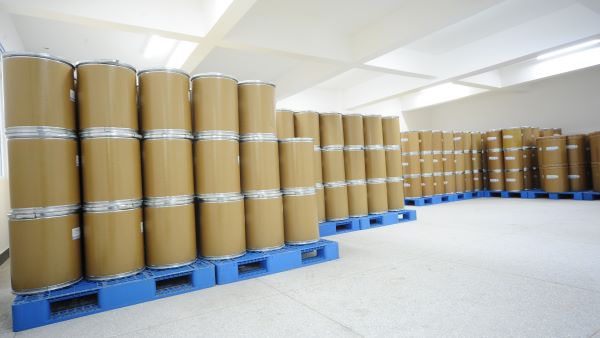
- 25 kg / fiber drum with two inner plastic bags.
- Custom packaging available upon request (e.g., 5 kg, 10 kg, or private-label options).
Shipping Terms
- Samples: shipped via DHL, FedEx, UPS, or TNT within 3–5 business days.
- Bulk orders: available by air freight or sea freight.
- Delivery terms: FOB, CIF, CFR, or DDP (subject to destination).
Shelf Life & Storage
- Store in a cool, dry place away from direct sunlight and moisture.
- Keep containers tightly sealed when not in use.
- Optimal storage temperature: 2–8°C for extended shelf life.