Product Description
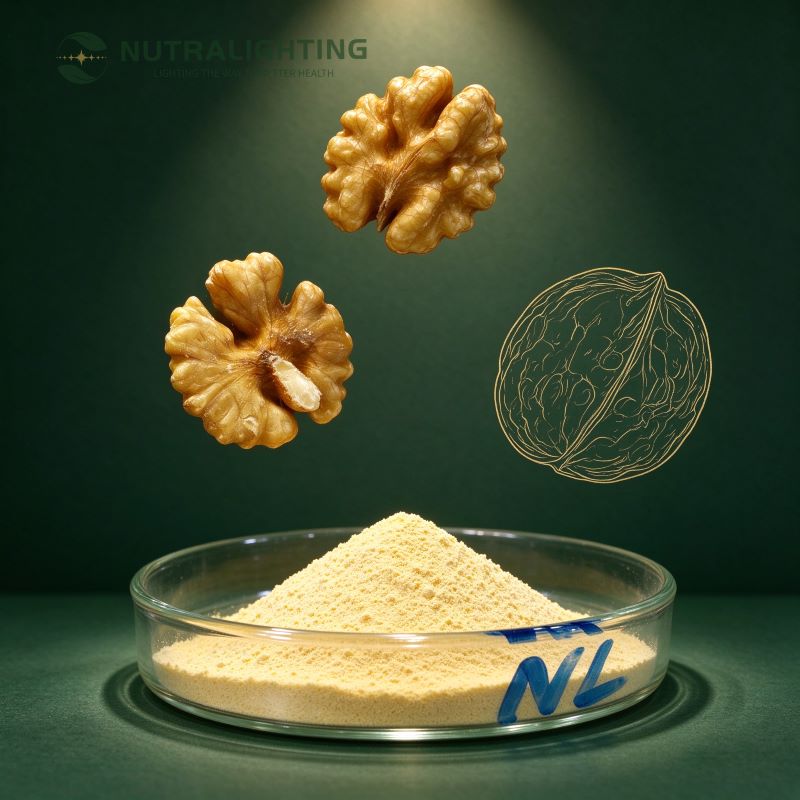
Walnut (Juglans regia) is the dried seed kernel of plants from the walnut family, rich in α-linolenic acid (ALA), phospholipids, and polyphenols, and is a traditional raw material for brain health and cardiovascular wellness foods. Walnut Extract product focuses on α-linolenic acid, phospholipids, and polyphenols as core active ingredients, developed for formulas supporting brain health, cardiovascular support, and antioxidant functions.
Product Description
Walnut Extract is carefully selected from authentic Hebei walnuts and refined through low-temperature cold pressing and supercritical CO2 extraction, with α-linolenic acid (ALA), phospholipids, and polyphenols as core actives, standardized to 9%-14% ALA. It mainly targets brain health, cardiovascular support, and antioxidant applications, and is widely used in dietary supplements, functional foods, and personal care products.
Walnut is the most common nut-based herb in China, with Hebei and Shanxi as the main production areas, producing over 1 million tons annually. Walnut extract is mainly used in brain health and cardiovascular wellness products.
Why Choose Nutralighting
- With years of expertise in plant extraction and a commitment to quality assurance, Nutralighting is your trusted partner for bulk Walnut Extract supply. We provide full documentation including COA, MSDS, and specifications upon request, and support OEM/private-label partnerships worldwide.
- Custom Specifications: Available in various concentration ratios and particle sizes to meet your formulation needs.
Basic Information
| Item | Content |
| Extract Name | Walnut Extract |
| Botanical Source | Juglans regia L. (Walnut) |
| Part Used | Seed kernel |
| Appearance | Light yellow to Brown |
| Common English Name | Walnut Extract / Black Walnut Extract |
| Standardization Options | 10:1 / 20:1 / 50:1 (Custom Available) |
| Main Components | Alpha-Linolenic Acid (ALA), Phospholipids, Polyphenols |
| Main Specifications | Alpha-Linolenic Acid (ALA) 9%-14% |
| Target Market | Europe, North America |
| Core Application Areas |
|
Standard Specifications (COA)
The following specifications are conventional reference values; the specific values are subject to each batch’s COA report.
| Test Items | Standards |
| Alpha-Linolenic Acid (ALA) | 9%-14% |
| Loss on Drying | ≤5.0% |
| Total Ash | ≤6.0% |
| Lead (Pb) | ≤1.0 mg/kg |
| Arsenic (As) | ≤2.0 mg/kg |
| Cadmium (Cd) | ≤0.5 mg/kg |
| Mercury (Hg) | ≤0.1 mg/kg |
| Pesticide Residues (Organochlorine/Organophosphorus) | Complies with USP <561> |
| Aflatoxin B1 | ≤5.0 μg/kg |
| Total Aflatoxins | ≤10.0 μg/kg |
| Total Microbial Count (TAMC) | ≤1×10⁴ CFU/g |
| Yeast and Mold (TYMC) | ≤1×10² CFU/g |
| Escherichia coli | Not detected (1g) |
| Salmonella | Not detected (1g) |
Introduction to Plant Material
The raw material of this product is the dried seed kernel of the walnut plant, Juglans regia L., belonging to the walnut family. It is mainly produced in Hebei, Liaoning, Shanxi, Yunnan, and other regions. Walnut is known as the ‘longevity fruit.’ It is included in Volume I of the 2020 edition of the Chinese Pharmacopoeia.
Core Efficacy
Walnut (Juglans regia) is rich in α-linolenic acid (ALA, 9%-14%), phospholipids, and polyphenols and is a traditional ingredient supporting brain health and cardiovascular function. Its Ω-3 fatty acids are an important component of brain cell membranes; polyphenols have antioxidant activity, and some clinical studies show that they may help improve levels of oxidized LDL and inflammatory markers. Regarding cognition, animal studies suggest that walnut extracts may improve indicators related to learning and memory. Specific effects need to be evaluated in conjunction with dosage form, dosage, and target population.
Regulatory and Regional Market Access Status
The following information is based on publicly available regulatory data. Actual market access should follow the latest regulations of the target country.
| Region/Country | Regulatory Status | Key Notes |
| United States (FDA) | Dietary Supplement / GRAS | For plant extracts, they are generally regulated as dietary supplements; some ingredients have been recognized as GRAS (specific cases need individual confirmation). USP has included monographs for various extracts. |
| European Union (EFSA) | Traditional herbal medicines / dietary supplements | EU Directive 2004/24/EC regulates traditional herbal medicines; extracts used as ingredients in dietary supplements must comply with the EU Novel Food Regulation (EU) 2015/2283 (some traditional herbs enjoy simplified procedures). |
Application Directions and Recommended Dosage
| Application direction | Recommended addition amount | Applicable dosage forms | Remarks |
| Oral solid beverages / instant powders | According to specifications | Strip-packed, bag-packed, can-packed | Can be blended with other functional ingredients, recommended to control amount using standardized extracts |
| Pressed candy / capsules | Determined according to specifications | Tablets, hard capsules | Each unit is recommended to contain 250~500 mg of extract, 2~3 times daily |
| Oral liquid / functional beverages | Determined according to specifications | Glass bottles, PET bottles | It is recommended to disperse in warm water first before adding to the system, pay attention to pH stability |
| Personal care and skincare products | 0.1~2.0%(w/w) | Lotion, serum, mask | Solubility and stability need to be evaluated according to the formulation system |
Recommended daily dosage reference
- General health use: Use according to product specifications and the dosage recommended by the formulator
- Personal care and skincare: The amount added in formulations depends on the specific product, recommended 0.1~2.0%
- Brain health and cardiovascular daily support: Recommended to be combined with deep-sea fish oil or phospholipid blends, taken regularly for a long term.
Appendix: References
(The following references are for technical reference. Some are open access and can be consulted via PubMed/PMC or journal official websites)
[1] Bazinet R.P. et al., Journal of Nutrition, 2014; 144: 1822-1828.
[2] Valls-Comadilla M. et al., European Journal of Clinical Nutrition, 2013; 67: 1215-1221.
[3] Jiang R. et al., Journal of Nutrition, 2006; 136: 1847-1852.
Frequently Asked Questions
Walnut Extract is commonly used in nutraceutical supplements for its antioxidant and anti-inflammatory properties, in cosmetics for skin-conditioning and astringent effects, and in food & beverage as a natural coloring and functional ingredient.
Our standard MOQ is 1 kg for sample orders and 25 kg for bulk orders. Custom packaging and smaller quantities can be discussed on a case-by-case basis.
Yes, a Certificate of Analysis (COA) is provided with every shipment. Additional documentation such as MSDS, allergen statements, and microbiological reports are available upon request.
Absolutely. We offer full OEM and private-label support including custom packaging, labeling, and formulation consulting for partners worldwide.
Products are shipped in sealed, moisture-proof packaging. Store in a cool, dry place away from direct sunlight and strong odors. Properly stored, shelf life is 24 months from the date of manufacture.
Packaging & Shipping
Standard Packaging
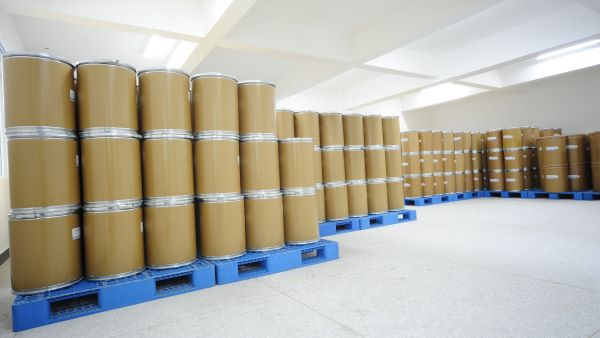
- Standard packaging: 25 kg fiber drums with double PE liner.
- Custom packaging available: 1 kg, 5 kg, 10 kg aluminum bags or cartons.
- Private-label packaging can be arranged per buyer specification.
Shipping Terms
- Shipped via express (DHL, FedEx, UPS), air freight, or sea freight depending on order quantity and destination.
- Sample orders typically dispatched within 3–5 business days.
- Bulk orders ship within 7–15 business days after order confirmation and payment receipt.
- DDP and CIF terms available for select regions.
Shelf Life & Storage
- Store in a cool, dry place below 25°C.
- Keep packaging sealed and protected from moisture, direct sunlight, and heat.
- Avoid storage near strong odors or volatile chemicals.
- Shelf life: 24 months from manufacture date under proper conditions.